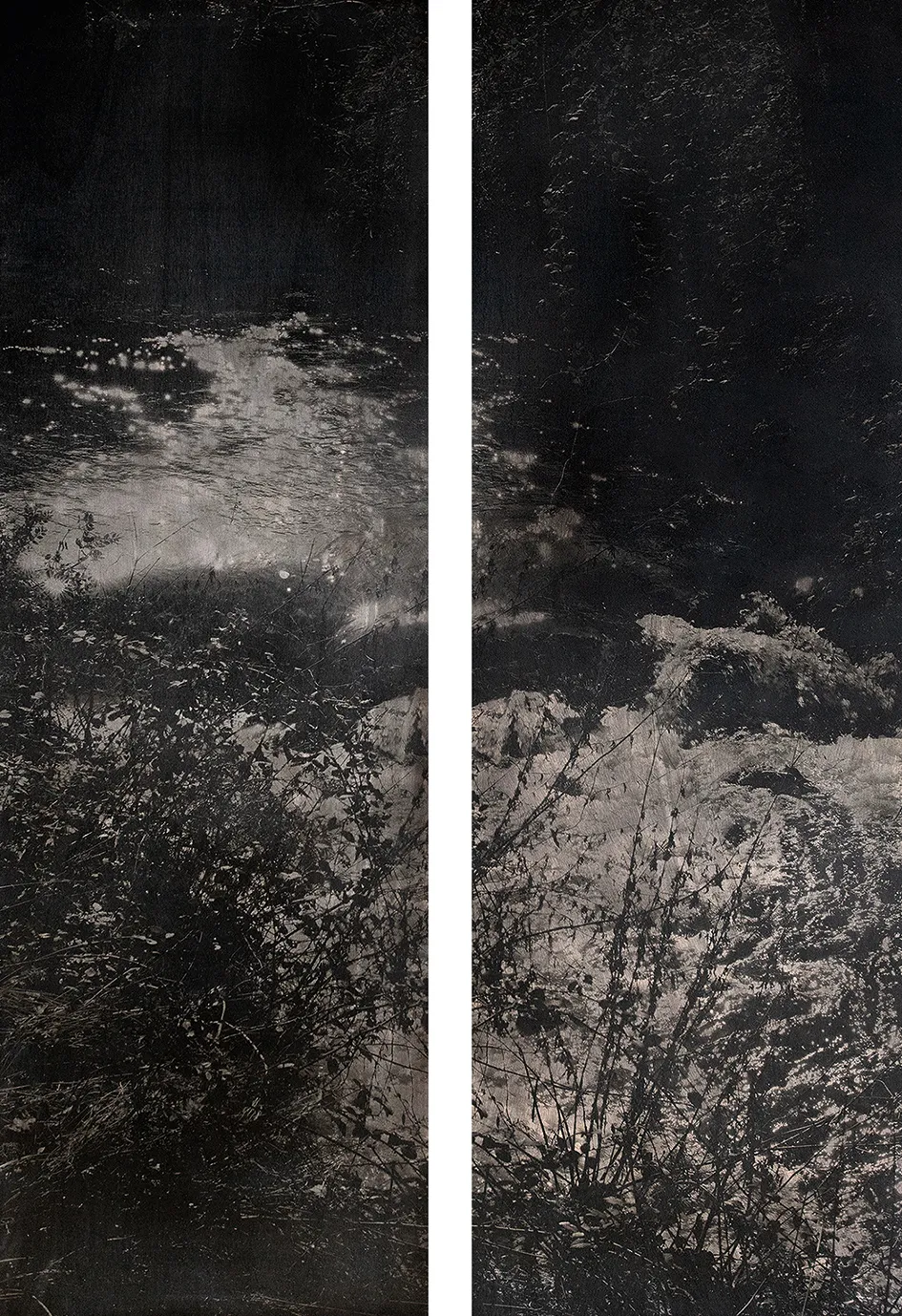
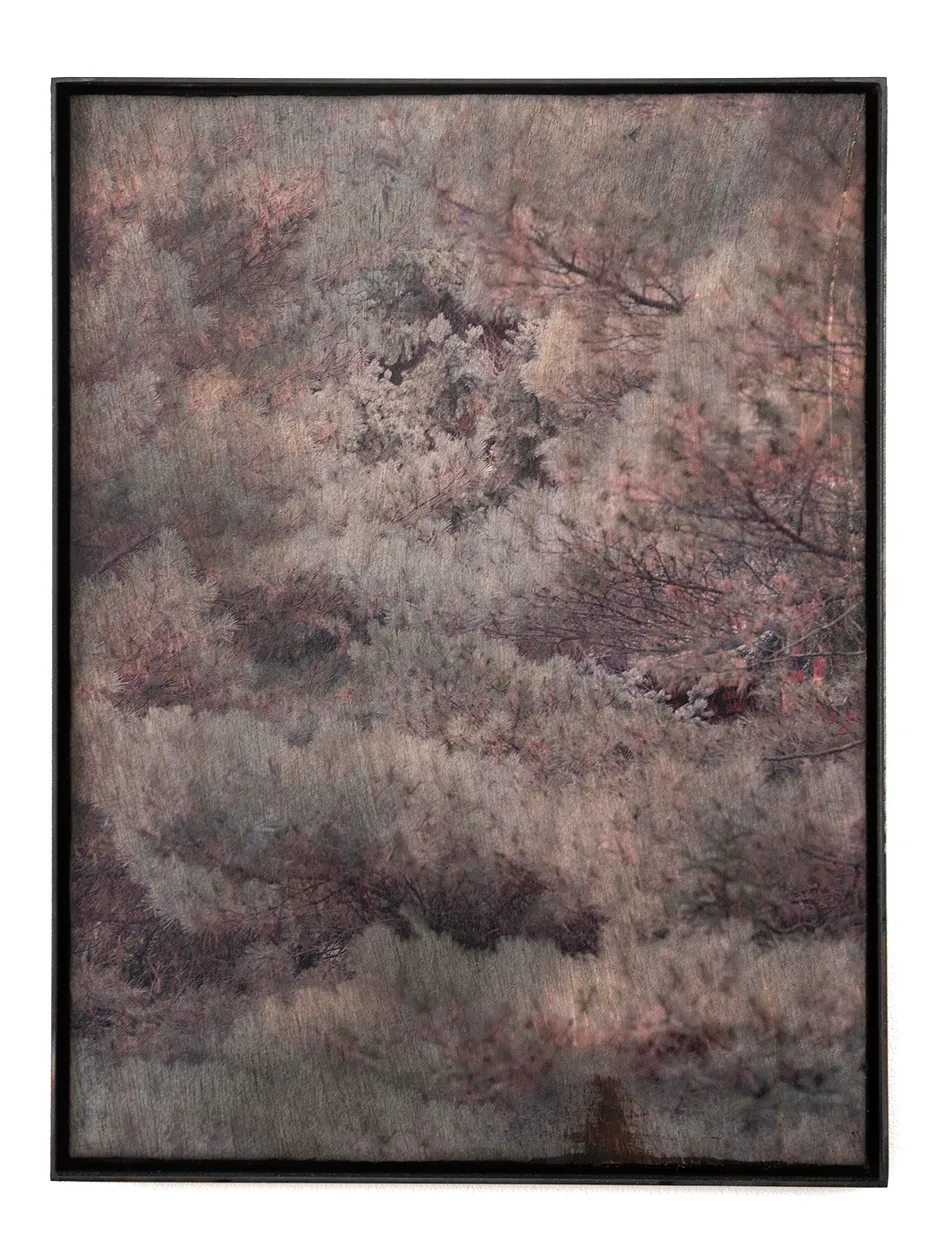
In the exhibition “Controlled Burn” at the Galerie im Tempelhof Museum, Serbian artist and photographer Mirjana Vrbaški explores the relationship between nature, human intervention, and ecological change. The exhibition is based on the question of how our understanding of natural habitats may shift in light of the global increase in wildfires—as well as the various meanings of fire in this context.
In 2024, Vrbaški received the photography scholarship from Haus am Kleistpark. As part of this grant, she explored the Dreifaltigkeitsfriedhof III (Trinity Cemetery) in northern Mariendorf—a fragile urban oasis and a diverse biotope currently endangered by development projects. Her engagement with this specific site and the threats it faces became the starting point for a broader examination of the relationship between humankind and nature.
Against the backdrop of current ecological changes and the global rise in wildfires, Vrbaški expanded her photographic research to include various landscapes across Europe. In doing so, she is less focused on the destructive effects of fire, paying more attention to its preservative and transformative properties instead. Among other things, she draws on indigenous ecological knowledge and traditional fire management practices, in which controlled fires are used to maintain and regenerate landscapes as well as to reduce the risk of uncontrolled ones. Faced with an increased threat of wildfires, these practices—some long suppressed, some forgotten—are now gaining renewed traction.
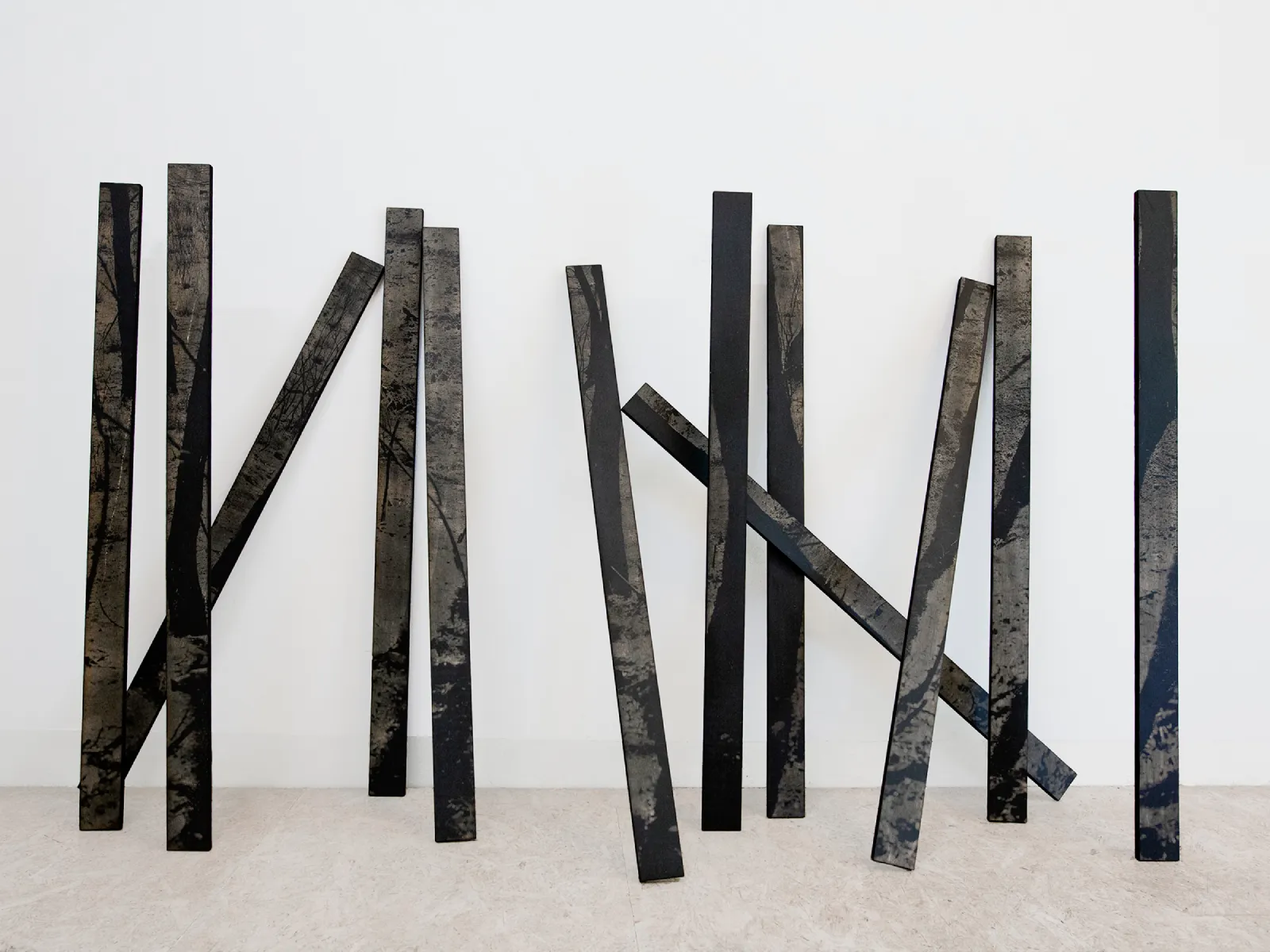
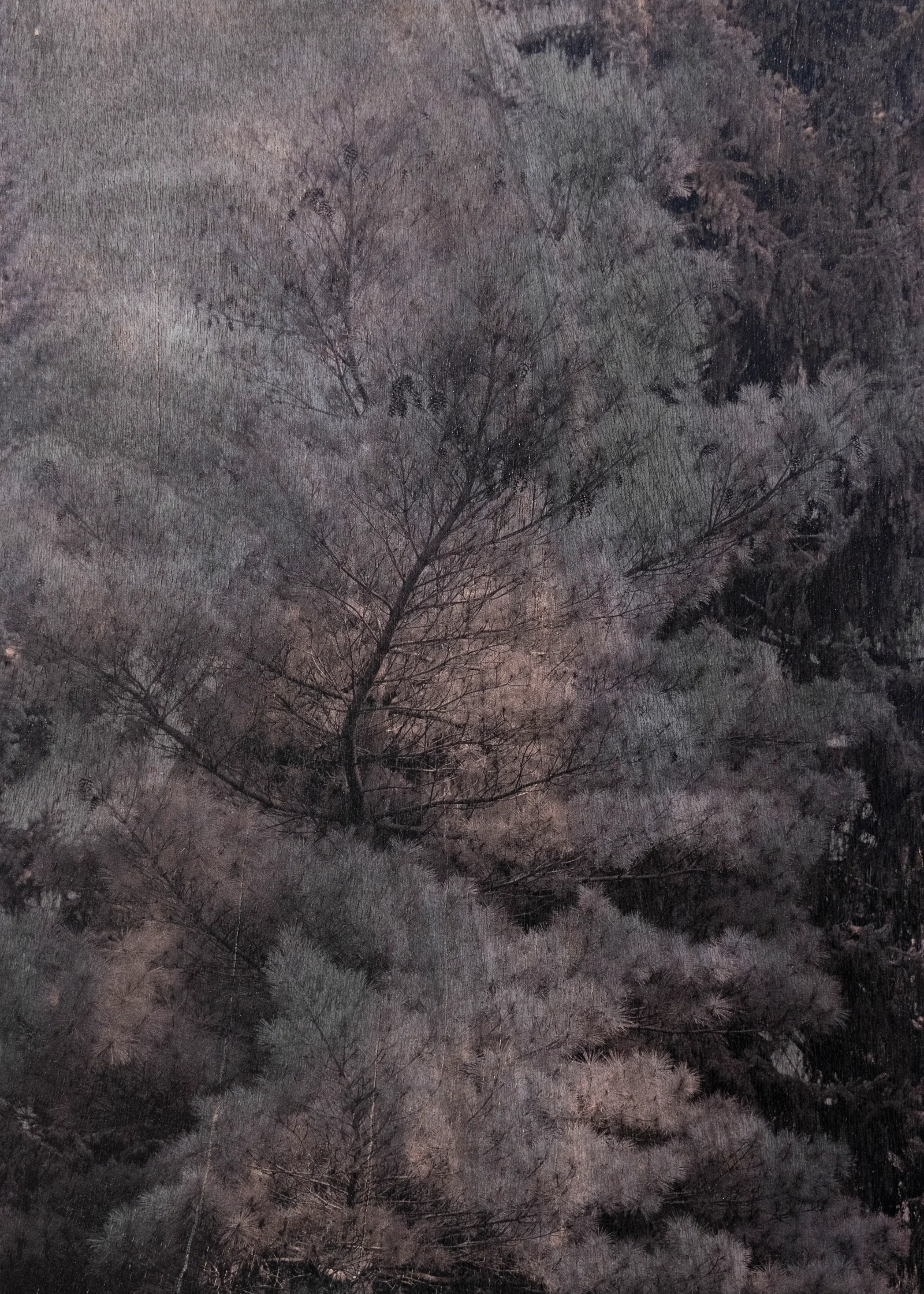
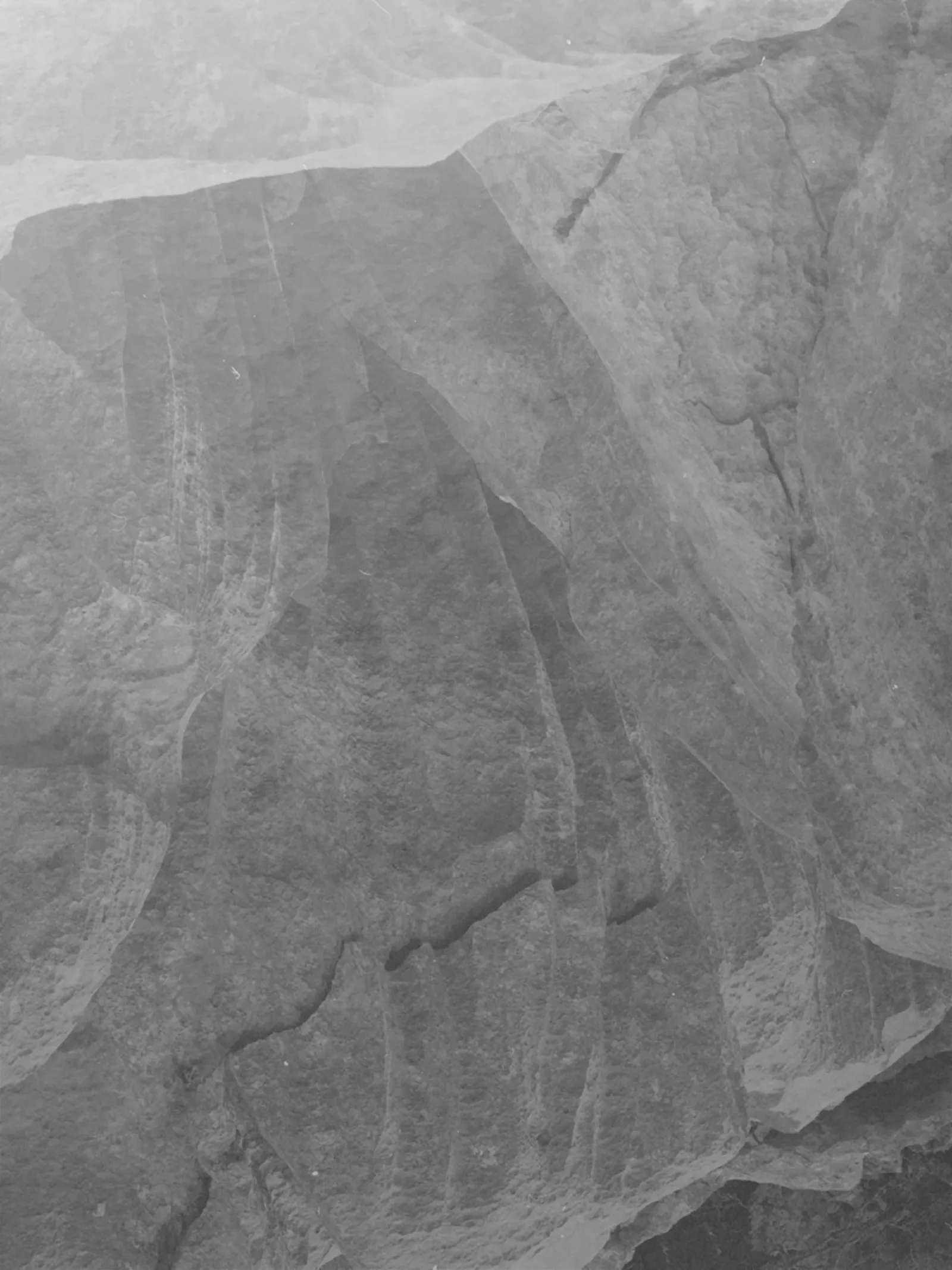
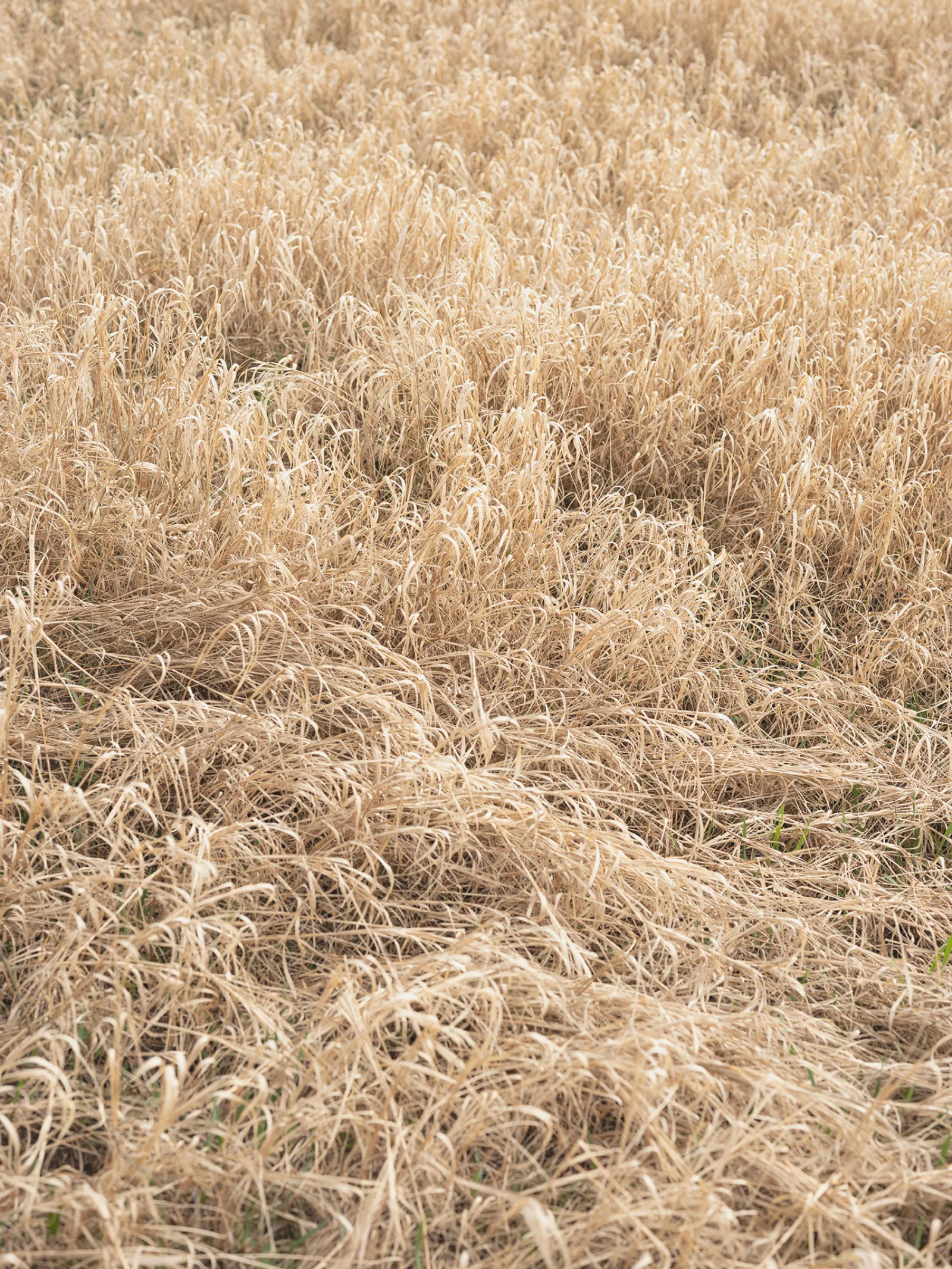
In “Controlled Burn”, Vrbaški showcases recent photographs of natural habitats. While traveling through Europe, she explored meadows and forests, as well as burnt fields and areas that had just regrown or were in the process of regeneration. For the exhibition, the artist combines photographs with various carrier materials such as glass and wood. Images are transferred onto wooden panels and then exposed to fire. This creates a tense interplay between the photographic motifs of trees and landscapes and the material structure of the wood, itself altered by the controlled, yet only partially predictable effects of the fire.
Vrbaški combines large-format diptychs depicting forest motifs on wooden panels with installations, smaller works, and photographs on glass. By working with various formats and materials, the artist explores the shifting relationship between the photographic image, the image carrier, and the visible traces of fire.
Mirjana Vrbaški (b. 1978) is a Serbian visual artist. In her work, she explores the subtle relationships between people and their surroundings. She has been awarded various international photography awards for her longterm projects. Vrbaški holds a degree in English literature from the University of Guelph in Canada and a B.A. in photography from the Roy-al Academy of Art (KABK) in The Hague. Her work has been exhibited internationally at institutions such as the Fotomuseum Den Haag, the Kunsthal Rotterdam, the National Portrait Gallery in London, and the Museum Kranenburgh (NL). Her photographs are part of major public and private collections. She has lived and worked in Berlin since 2011.
Framework program
☞ Sign-up for PiE’s free, weekly Newsletter and stay up to date!
Thursday, Oct 8, 2026, 7 pm
Opening Reception
with an introduction by Rossella Scrascia, Curatorial Trainee at Haus am Kleistpark.
Thursday, Nov 26, 2026, 7 pm
Panel Discussion (de)
“Catching Fire”: Reflections on the relationship between humans and fire in ecology and art. A conversation with Dr. Ramesh Glückler, geoecologist (Utrecht University), and Mirjana Vrbaški, artist; moderated by Julia Kochanek, art historian (Technical University of Berlin).
Sunday, Jan 17, 2027, 4 – 6 pm
Finissage
With Mirjana Vrbaški.