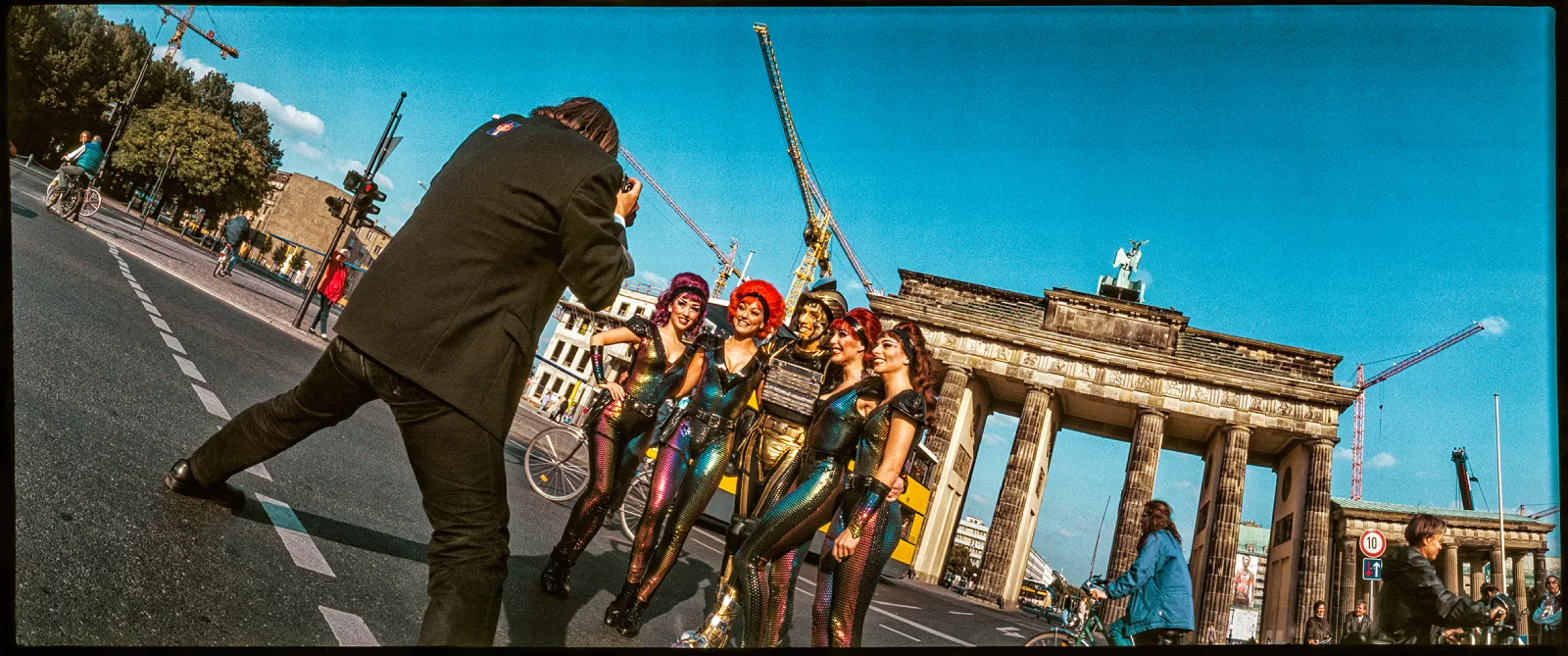
Harry Gruyaert defined a color aesthetic that has shaped generations of photographers. The Belgian-born artist took the time to speak with us about his work and how he is using form, color, light, and movement to reveal the magic of the everyday. The 85-year-old Magnum photographer is currently working on his next book which focuses on Paris, the city he has chosen to call home.
PiE: Why did you leave Belgium in your early twenties? Would you say your photography originally started as a yearning for something you couldn’t find at home?
Harry Gruyaert: At the time, back in 1962, Belgium was a very different place. There were no major photographers, no celebrated filmmakers— all of that happened much later. Later, the scene became fantastic, with people like Chantal Akerman and all those filmmakers who came after. But when I left, nothing was happening. I wanted to go to Paris, London, or the States. Paris was close, and it was the place to meet people whose work I deeply admired.
I was very interested in fashion. Whenever I looked at Vogue, I would see William Klein’s pictures and instantly know it was him without even reading his name. I thought it would be cool to see him and perhaps become his assistant to understand how he worked. So, I called him up and asked if I could show him my pictures. He asked: “Do you know how to load a Hasselblad?” I said yes. He told me to meet him that afternoon on Boulevard Saint-Germain where he had a fashion show to shoot.
“The whole point was personality. I didn’t waste any time trying to assist anyone. I understood straight away that the key was to find your own personality and to work in that direction.”
When I arrived, I saw this big, very pushy guy with a model—very American in his way of driving things. It was fascinating because he looked exactly like his pictures. Shortly after, I went to see Jeanloup Sieff, who was a very European fashion photographer, very different. And I realized he looked exactly like his pictures, too. In just two days, I understood that there was no point in becoming an assistant. The whole point was personality. I didn’t waste any time trying to assist anyone. I understood straight away that the key was to find your own personality and to work in that direction.
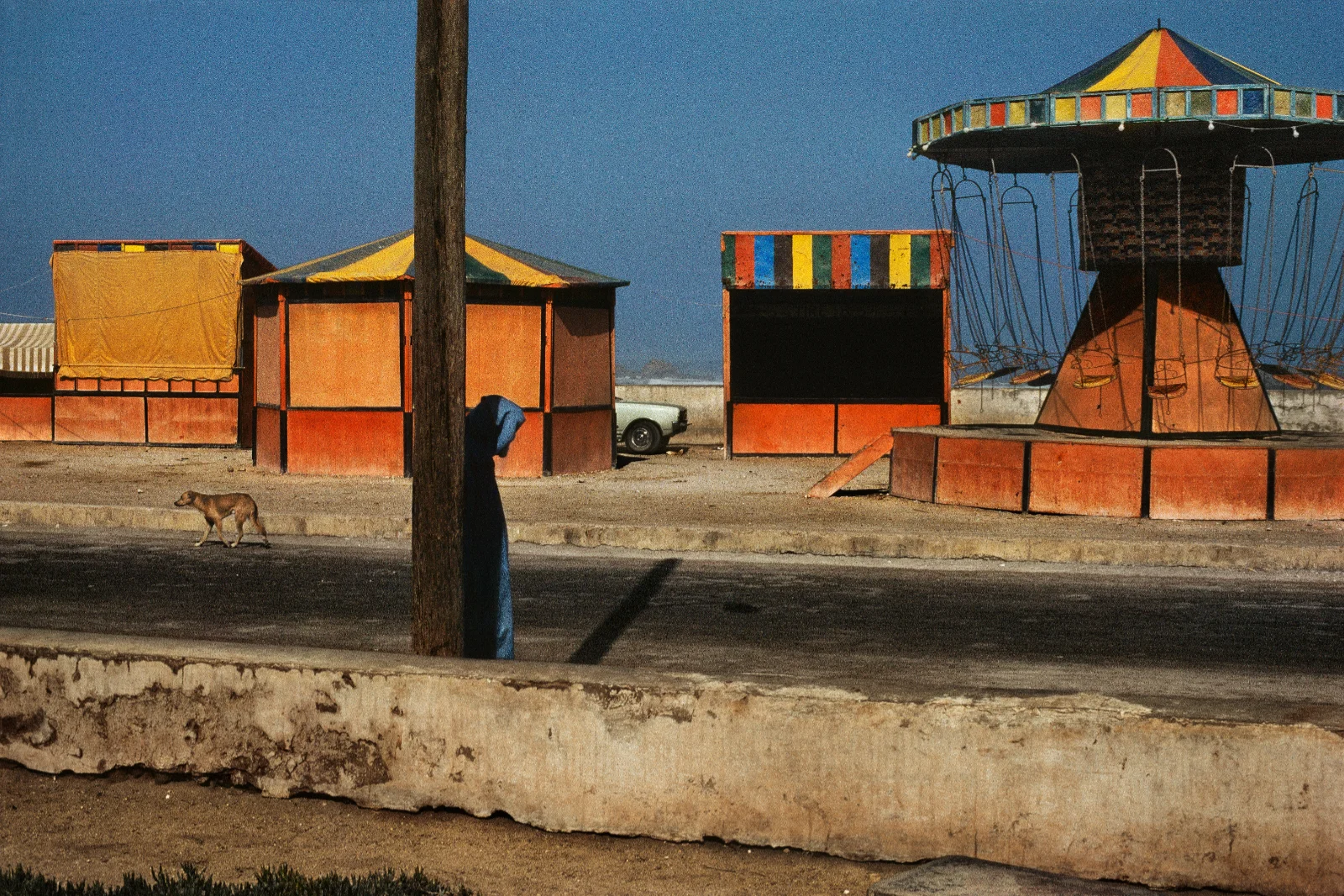
Would you say you needed to establish an inner distance to Belgium to find yourself, which eventually led to your book about your homeland?
Often, the most difficult place to photograph is the place where you live, because everything starts to feel normal. I was already living in Paris and going back and forth, and in the beginning, that’s when I took the best pictures. It’s all about being surprised and excited by discovery. When I discovered India or Morocco, I was so excited because those places were so fundamentally different.
So, was that visceral interest the driving force behind your books, rather than a fixed concept?
Exactly. It is never about a concept. I am simply attracted to certain situations, to light, and to things. After a while, looking back at the work I’ve done—even with my seascapes—I suddenly realized: “I have so many seascapes. Let’s make a book.” But there was never a preconceived notion. It’s an accumulation of pictures. You look at them and think, maybe this makes sense as a book. Then you start to edit and focus on the sequencing. Every book I make now is also a projection accompanied by a wonderful soundtrack made by the composer Tuur Florizoone. There is a QR code at the end of the books, like in Homeland or the New York book, so you can watch the projection with the music. In a way, I am making my own movies now. I’ve made about ten of them.
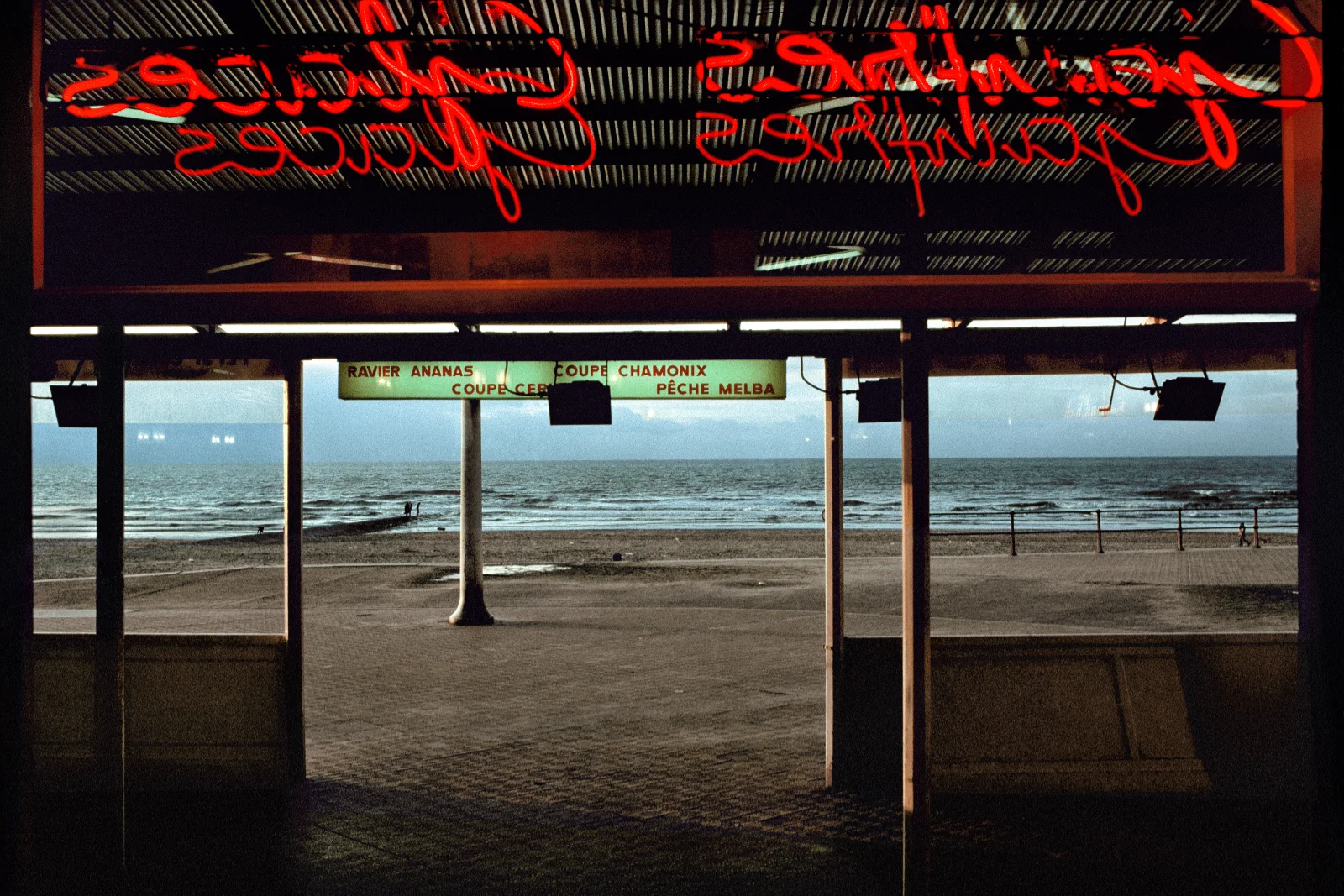
Would you have become a filmmaker instead of a photographer if the circumstances had been different?
In the beginning, yes. I could have become a filmmaker. I actually worked as a director of photography for some black-and-white documentaries on Flemish television. I liked doing it, but I wanted to make my own films, and I could never find the money to produce them. As a photographer, you work by yourself. You don’t necessarily need other people. If you shoot black and white, you can even process it yourself. It was a question of money, too—I had to make a living. I’ve never made a single cent from anything other than photography. I did everything: sports, architecture, and a lot of industrial work, which ultimately allowed me to do my personal work.
But is your personal view still more aligned with a photographer or a filmmaker?
A lot of people who see my books or exhibitions tell me it feels like a movie. There is obviously a major connection. Many filmmakers talk to me about my photographs. They point at a picture and say, “This is just like your films,” or they tell me that for a specific scene in their movie, they looked at my work and tried to capture that essence. There is a lot of going back and forth with American, French, and international directors. If the technology we have now—small, high-quality cameras—had existed when I started, maybe I would have made more films. But as I said, the films I make now are the ones I create with my photographs, where the soundtrack is extremely important.
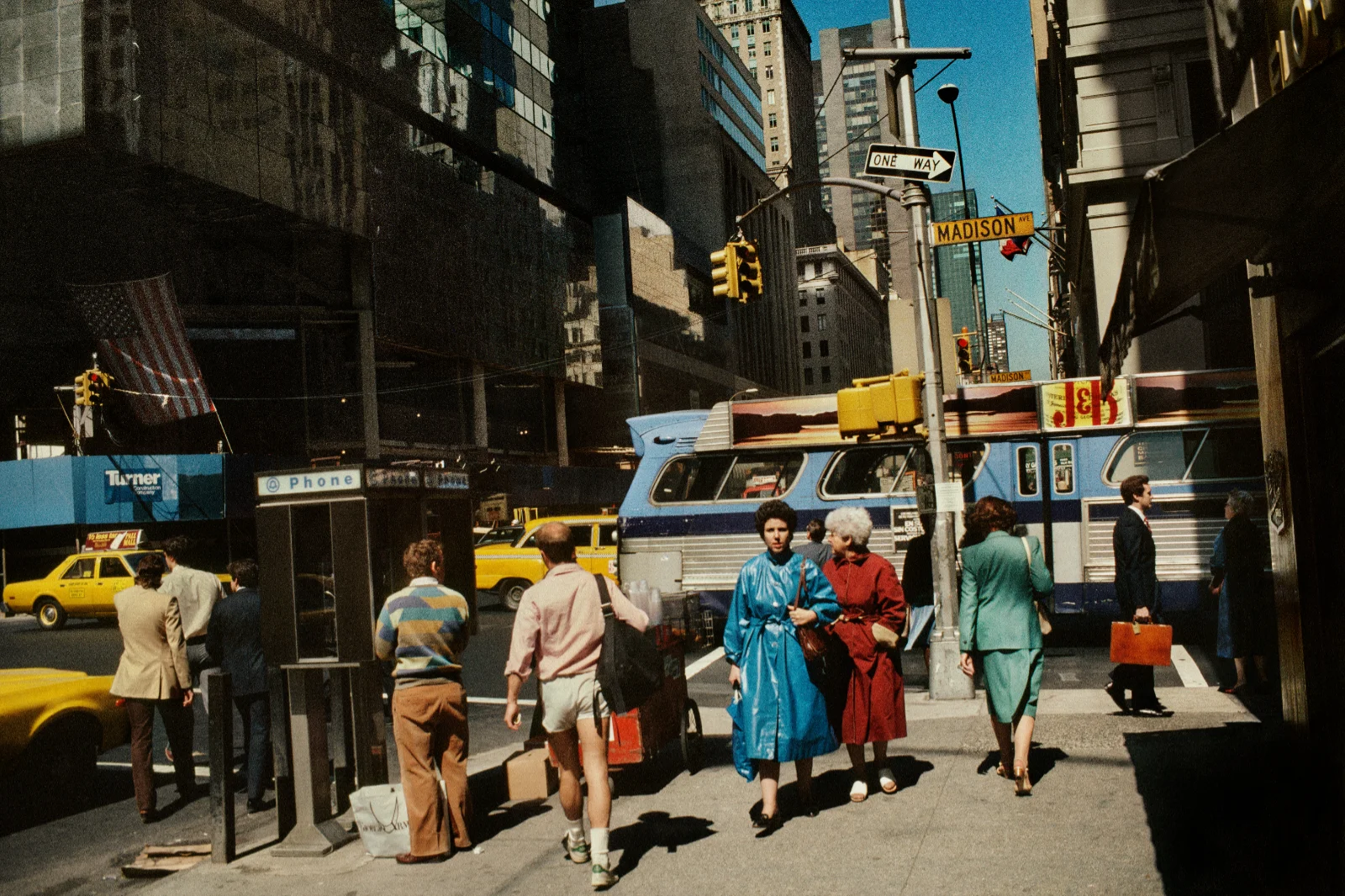
Do you feel that modern cities are becoming too uniform? Is street photography still interesting today?
My next book is on Paris. Some pictures are sixty years old, and some I took just yesterday. Obviously, things change. You can only be sure of one thing in life: nothing stays the same. Everything evolves all the time. Europe is becoming flatter, much like the States. You find the same advertising everywhere, and people dress the same way. The world is losing a lot of its character, which is a pity, but I have to cope with it. There is no way back.
You seem to have a special interest in what some call “non-places”—spaces where people are just passing through.
Sure. My work is fundamentally about light, architecture, and colors. Sometimes people passing through the frame make it better and give it more sense. But I never really think about the people themselves, except for one or two once in a while. In my latest New York book, a close friend of mine—the very famous French filmmaker Cédric Klapisch—actually wrote little scenarios about the people in my photographs. He made them come alive, turning them into specific characters. It’s fascinating, and that’s why you have to look at the book, read the text, and go back to the pages it refers to.
Could you choose one of your photographs that means a lot to you, and tell us the story or the moment behind it?
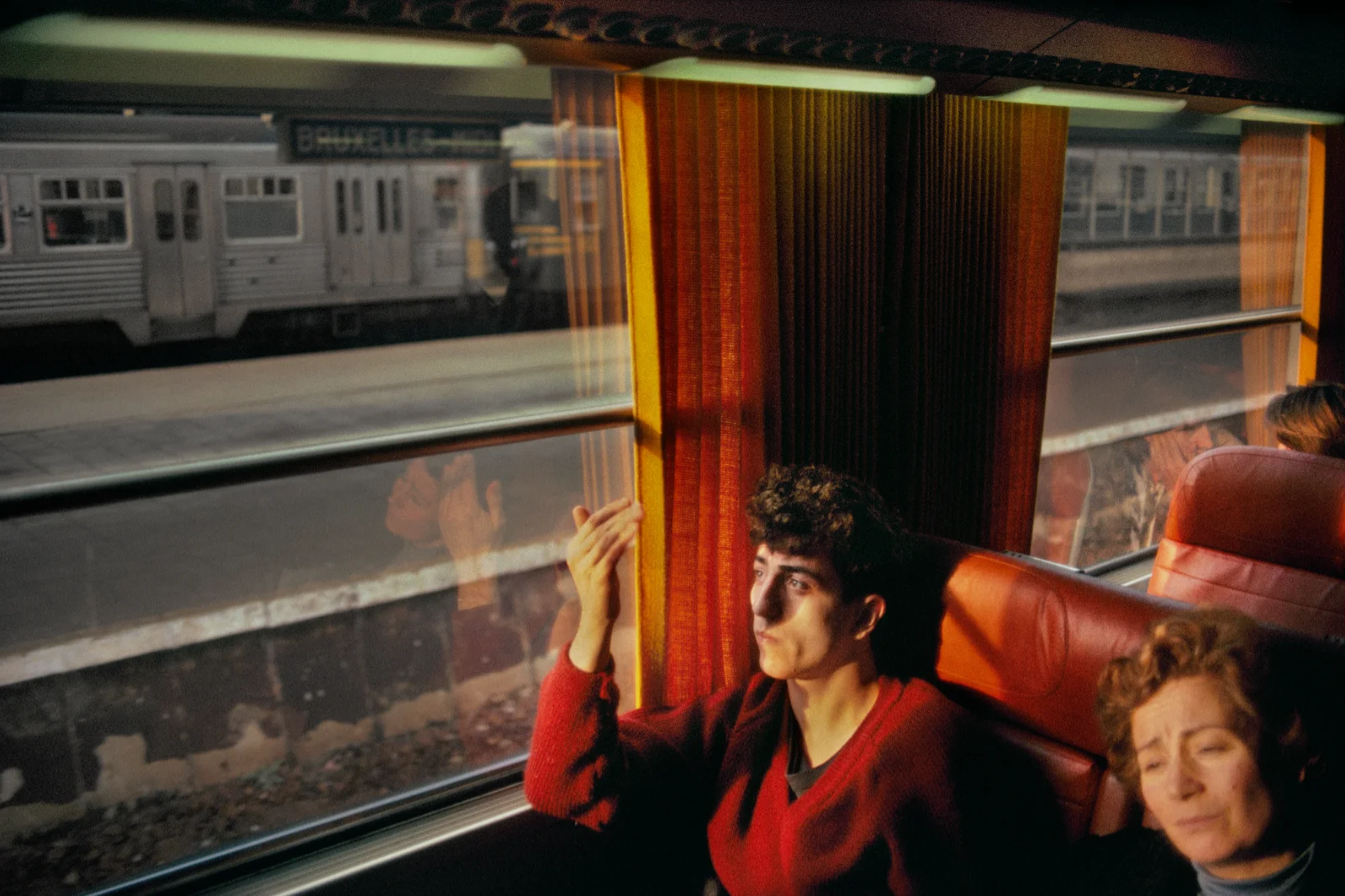
At my exhibition in Arles in 2026, we showed a photograph I took sixty years ago in Brussels of a young boy and his mother sitting in a train, with a beautiful light coming in and the boy’s reflection visible in the window. During the vernissage, I noticed a woman standing in front of that print, weeping. I went up to her and asked: “Excuse me, what’s the matter? Do you know the people in the picture?” She said: “No, I don’t know them. But the picture moves me.” A couple of days later, the festival organizers called me and said I needed to talk to a person in Marseille. I called him up, and what he told me was unbelievable.
“I love the stories where, I think there’s something magic of photography, where things come together in a very mysterious way. I think I attract things and things attract me. So, it’s kind of the chemical stuff going on.”
That woman at the exhibition, who was so deeply moved by the photograph for some unknown reason, had shown the picture to a friend of hers. That friend showed it to another friend, who eventually showed it to this man. And he told me: “That is me. I am the little boy in that photograph sixty years ago, sitting next to my mother, who just passed away.” It turned out they were from Marseille and had only traveled to Brussels once in their entire lives to visit friends. I caught them in the exact moment they were taking the train back home. It is strange how things come together and make sense somehow. I have so many stories like that, which are kind of miracles. And I love the stories where, I think there’s something magic of photography, where things come together in a very mysterious way. I think I attract things and things attract me. So, it’s kind of the chemical stuff going on.
That’s incredible. Do you have an outlook on what’s next for you? What projects are you working on now?
I am currently working on a big show and a new book about Paris. Some of those pictures are sixty years old, and some I took just yesterday. Before that, I have a show coming up called It’s Not About Cars. In every single photograph, there is a piece of a car. Cars used to be so colorful, especially American cars. The car itself isn’t important; it’s just an excuse, a thread that links things together across at least ten different countries. It’s similar to a book I did called “In Between Worlds,” which focused on being outside looking in, or being inside looking out. Again, it was never my initial intention to do that, but looking at the archive, I discovered so many pictures that showed exactly that. And I’ll give a workshop with ArtFotoMode in Berlin, directed by Michael Grieve, in June 2027.