The Museum Europäischer Kulturen (Museum of European Cultures, MEK) is the first to present an exhibition of photographs by Frank Gaudlitz taken in Moldova, Georgia and Armenia, which were formerly Soviet Republics. Since 2022, Gaudlitz and his team have been taking portraits of refugees and documenting their personal life stories there. The exhibition displays some fifty arresting images of people in makeshift accommodations – characterised by loss, uncertainty and the hope for a better future. The show will be supplemented by a projection of selected works from Gaudlitz’s extensive archive.
Currently, there are over 122 million people fleeing war, oppression, persecution and disaster around the world – more than ever before. Among them are more than 10 million Ukrainians, whose lives have been shattered by Russia’s war of aggression. They have had to leave their homes – after family members, friends and neighbours were killed, their cities heavily damaged, and staying seemed impossible. Behind them lies destruction – before them lies flight into an uncertain future.
In recent years, photographer Frank Gaudlitz has repeatedly travelled to the former Soviet Republics of Moldova, Georgia and Armenia – countries that have taken in a vast number of refugees since February 2022. Moldova, for instance, has granted more Ukrainians protection in proportion to its population than nearly any other country. Georgia and Armenia, as well, affected similarly by Russian influence and territorial conflicts, have taken in refugees not only from Ukraine but also from Russia. Vladimir Putin’s authoritarian regime has made it necessary for some Russians, including journalists, artists, queer people and conscientious objectors, also to leave their homeland, where they can no longer live securely.
Portraits, Quotes, Interviews – and a Book of Wishes
The exhibition at the Museum Europäischer Kulturen is the first extensive show of Frank Gaudlitz’s many-year projects in these countries. Together with his team, he has portrayed refugees and documented their life stories. The result is nearly fifty photographs of people living in makeshift quarters – reflecting loss and uncertainty, but also hope. Their faces tell of pain and fear, but also of courage and confidence. The portraits are accompanied by numerous quotations and interviews, all of which underscore an individual fate shaped by flight and a loss of homeland. In addition, those portrayed were asked to write their wishes for the future in an album. This moving Book of Wishes reveals the fears and hopes that accompany the refugees.
Complex Backgrounds and Migration’s Personal Dimensions
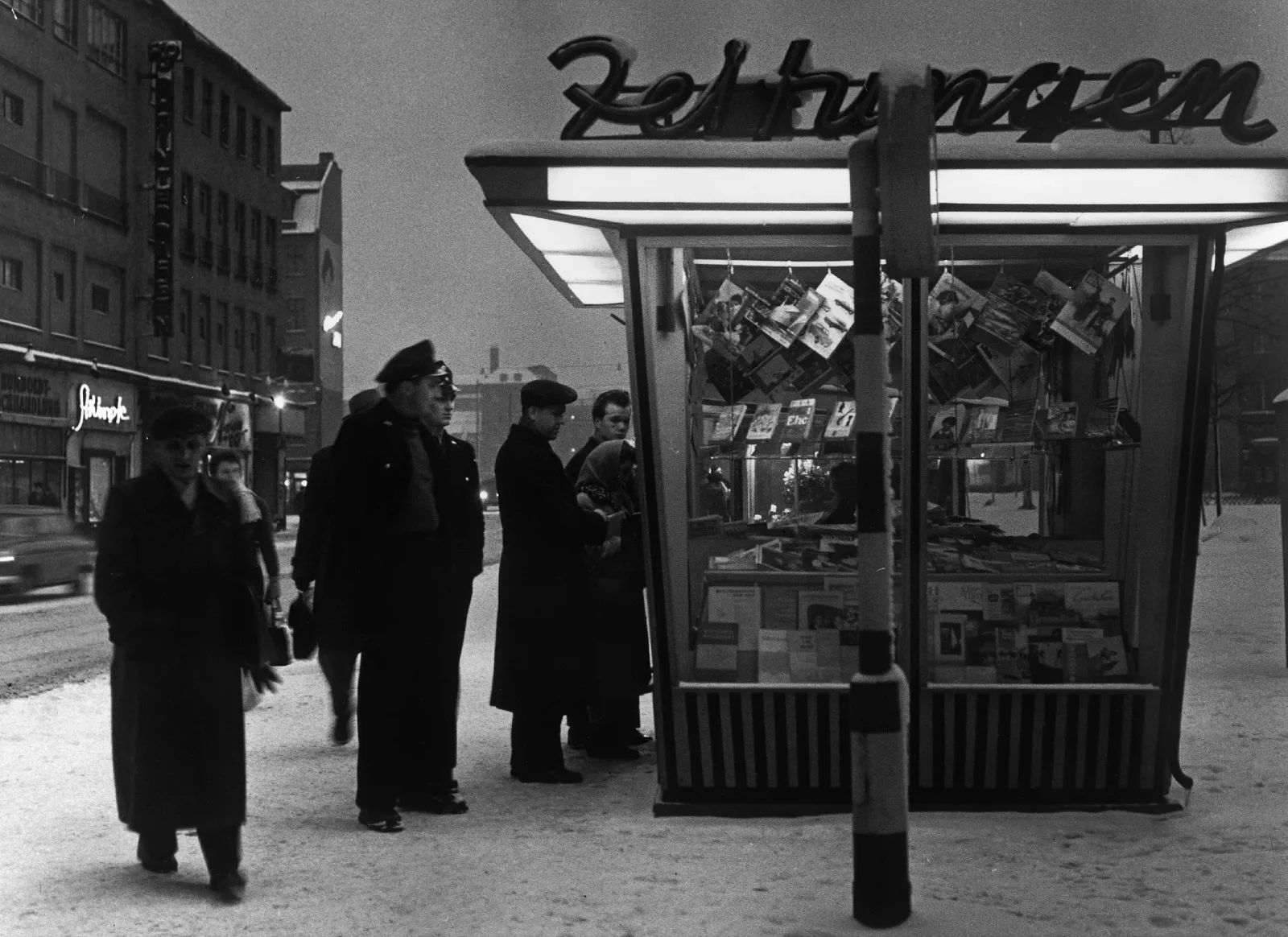
The exhibition makes it possible for visitors to connect abstract statistics of global refugee movements with biographies drawn from people’s actual lives. It grants access to migration’s more personal aspects and encourages discussion about the complex backgrounds of flight, exile and new beginnings in Europe. An accompanying projection shows selected works from the archive Frank Gaudlitz has assembled over many years. Since 1988, Gaudlitz has been photographically chronicling social developments from the late phase of the Soviet Union up to present-day Russia. His works provide insights into political, social and cultural transformation processes as well as into ideological continuities. A majority of the Russian population approves of their country’s persistent aggression against Ukraine following the annexation of Crimea in 2014. These images make apparent how nationalism, imperialism, and militarism have established themselves in Russia today as defining social trends.
The Photographer Frank Gaudlitz
From 1987 to 1991, Frank Gaudlitz studied art photography with Arno Fischer at the Hochschule für Grafik und Buchkunst in Leipzig. Since then, he has realised extensive long-term projects, especially in Russia, Eastern Europe and South America. His photographic works are dedicated to social upheaval and the impact it has on life’s realities for the individual. Gaudlitz has received many awards for his work.
Exhibition Publication
The exhibition is accompanied by the bilingual (German / English) publication 24022022 | 33 Porträts / 33 Portraits by Frank Gaudlitz. In addition to the portraits, it contains 18 interviews and handwritten entries from the Buch der Wünsche / Book of Wishes.
Curators
The exhibition is curated by Sofia Botvinnik (MEK), Franziska Schmidt (co-curator) and Andrea Vándor (Coordination East-Central and Southeast Europe at the MEK).
A special exhibition of the Museum Europäischer Kulturen – Staatliche Museen zu Berlin in cooperation with the Coordination East Central and Southeast Europe at the Museum of European Cultures, Berlin, and the German Culture Forum for Central and Eastern Europe, Potsdam.
Framework program
☞ Sign-up for PiE’s free, weekly Newsletter and stay up to date!
Führung für Gruppen (de)
Rundgang durch die Sonderausstellung, 60 Minuten. Max. 25 Teilnehmer. Kosten: 100 € zzgl. Eintritt.
Details
Ausstellungsgespräch (de)
Welche Geschichten erzählen Gesichter? Angebot für Sekundarstufe I – II. 60 Minuten | 30 Euro.
Buchungsanfrage
Sonntag, 16. Nov 2025, 15 Uhr
Was heißt eigentlich Flucht?
Expert*innengespräch mit Svenja Niederfranke (de)
Begriffe wie Flucht, Migration und Asyl prägen aktuelle gesellschaftliche und politische Diskussionen. Doch in Debatten werden sie häufig unscharf verwendet oder gezielt verfälscht. Umso wichtiger ist es, ihre Unterschiede klar zu benennen und ihre Bedeutung besser zu verstehen. Svenja Niederfranke vom Zentrum Migration der Deutschen Gesellschaft für Auswärtige Politik geht diesen Fragen nach. Sie erläutert, was die Begriffe politisch wie juristisch bedeuten, und zeigt, warum eine präzise Sprache entscheidend ist, wenn es um Flucht und Migration geht.
Die Veranstaltung findet auf Deutsch statt | Im Museumseintritt enthalten | Keine Anmeldung erforderlich.
Details
Samstag, 29. Nov 2025, 15 Uhr
Journalismus im Exil. Die neue Realität der Medienwelt.
Expert*innengespräch mit Angelina Davydova und Marian Vogel (de)
Nach Beginn des russischen Angriffskriegs auf die Ukraine im Jahr 2022 sahen sich viele russische Journalist*innen – und ganze Redaktionen – gezwungen, das Land zu verlassen und im Exil weiterzuarbeiten. Viele von ihnen reisten nach Georgien und Armenien aus – ihre Porträts sind in der Ausstellung zu sehen. Einige zogen später in andere Länder weiter. In dieser Veranstaltung berichten die Journalistin Angelina Davydova, die heute in Berlin lebt und Teil des Rechercheteams um Frank Gaudlitz war, und Marian Vogel von Media in Cooperation and Transition (MiCT International) über Leben und Arbeit von Journalistinnen im Exil: Wie sieht ihr Alltag aus? Welche Bedingungen und Hürden erleben sie? Welche Rolle spielt Exil-Journalismus in Zeiten von Krieg, Repression und globaler Berichterstattung?
Details
Samstag, 13. Dez 2025 15 Uhr
Migration aus der Ukraine im vierten Kriegsjahr. Vortrag von Igor Mitchnik (de)
Der russische Angriffskrieg gegen die Ukraine dauert an – und mit ihm die größte Fluchtbewegung in Europa seit dem Zweiten Weltkrieg. Millionen Ukrainer*innen leben inzwischen in den Nachbarländern oder innerhalb der Ukraine in neuer Umgebung – ob und wann sie in ihre Heimatorte zurückkehren können bleibt ungewiss. Wie haben sich Aufnahme und Integration in Polen, Deutschland und Moldau entwickelt? Welche Herausforderungen stehen Geflüchteten und aufnehmenden Gesellschaften bevor? Igor Mitchnik analysiert aktuelle Entwicklungen, stellt Trends und Daten vor und gibt einen Einblick in die komplexe Migrationsdynamiken zwischen Flucht, Bleibeperspektiven und möglicher Heimkehr.
Details