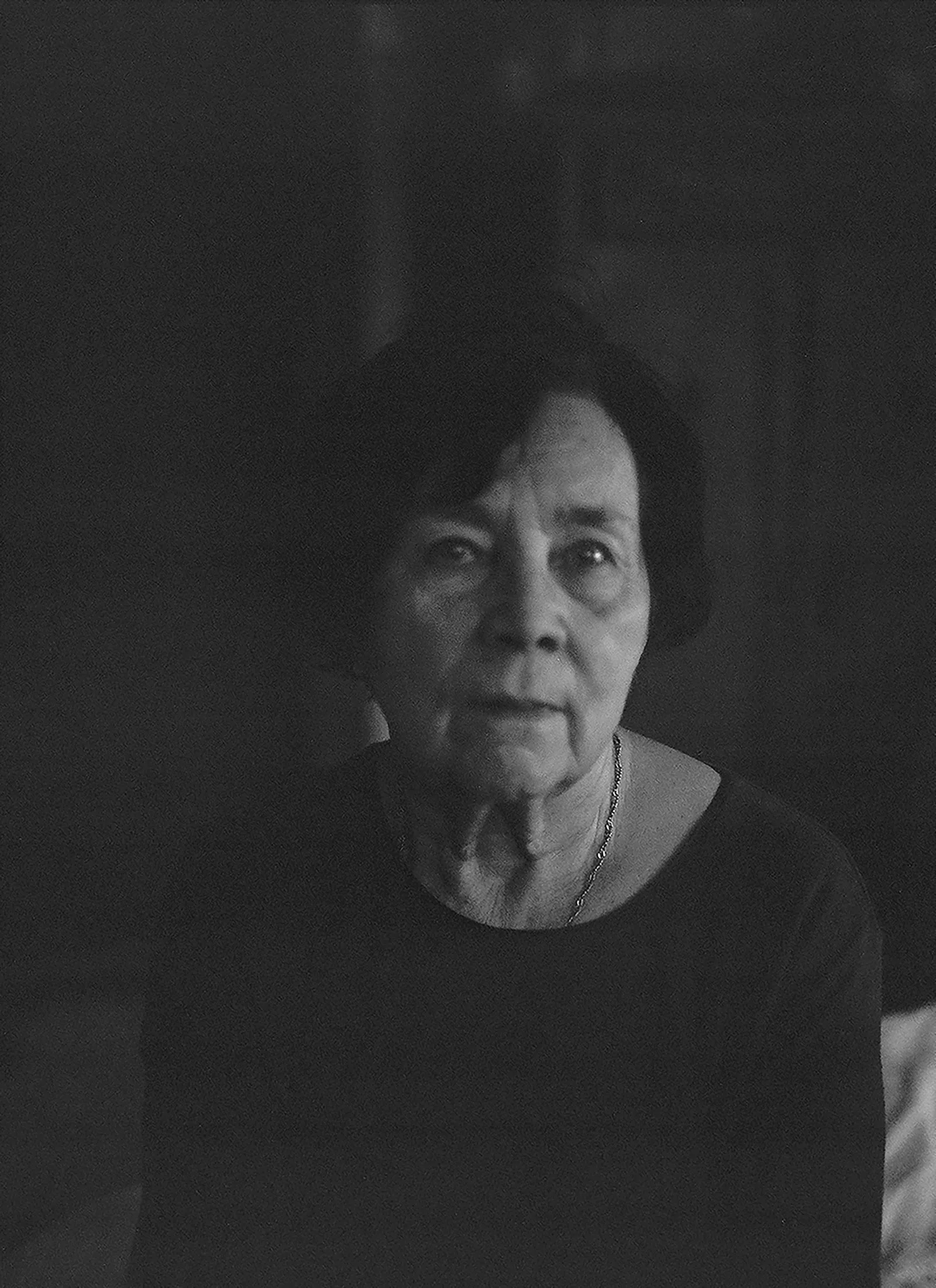
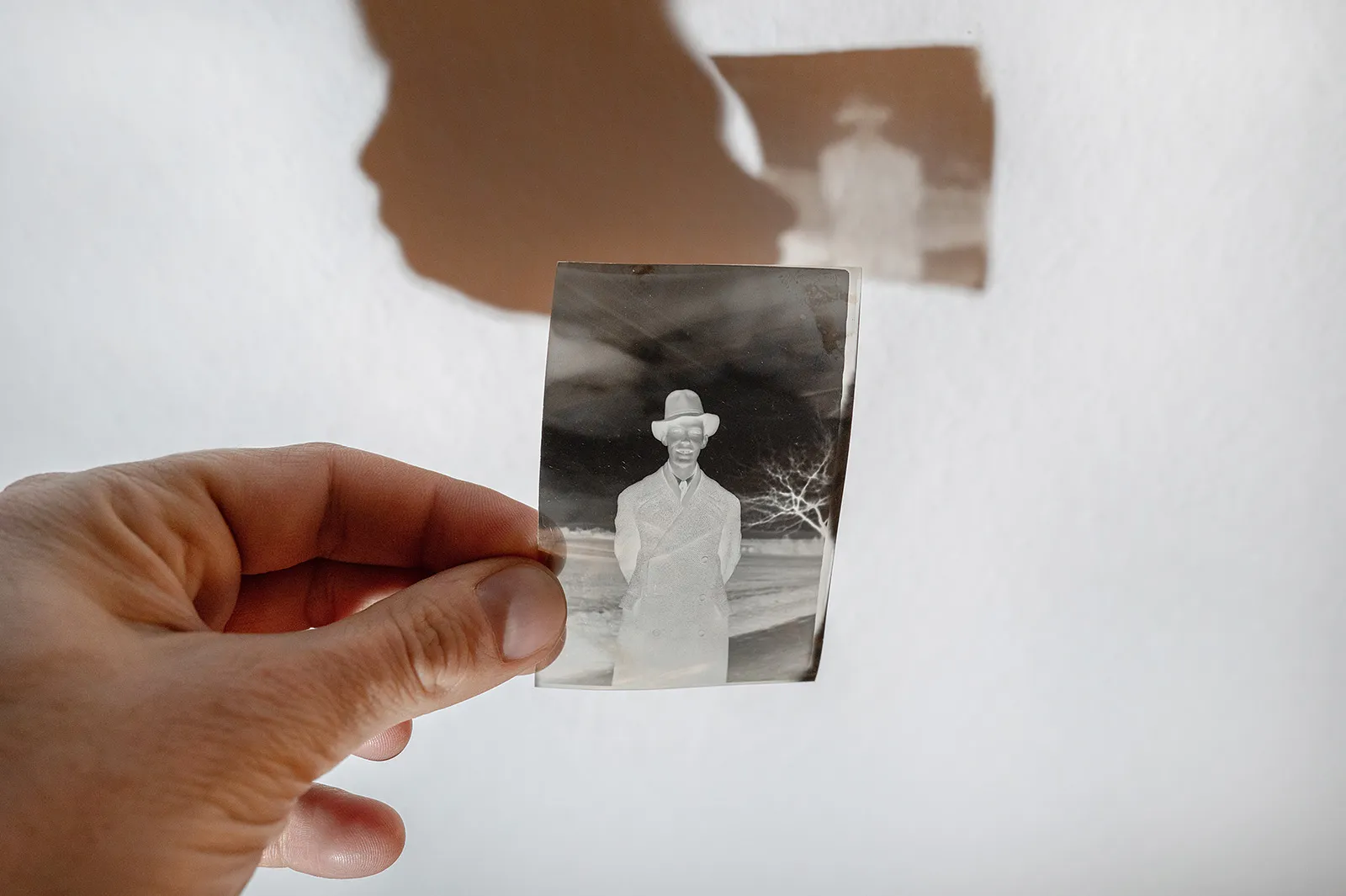
The seminar began with an exploration of each participant’s own family archive — whether in the form of photo albums, disordered estates, stories passed down through generations, or family histories that have remained unspoken.
The participants present deeply personal responses through new constellations of archival material, montages, collages, and newly created photographs. What unites these works is a shared inquiry into how one’s origins shape both individual identity and collective memory.
These works were created during a year long seminar at the Ostkreuzschule für Fotografie, led by Annette Hauschild.
With works by Matthias Christen, Luan Afra Evans, Florian Günzel, Jens Gyarmaty, Matthias Hamm, Celestine Hassenfratz, Emma Liebs, Christiane Linsel, Ralf Micus, Suzanne Reichenbach.
Matthias Christen | The Opposite Side
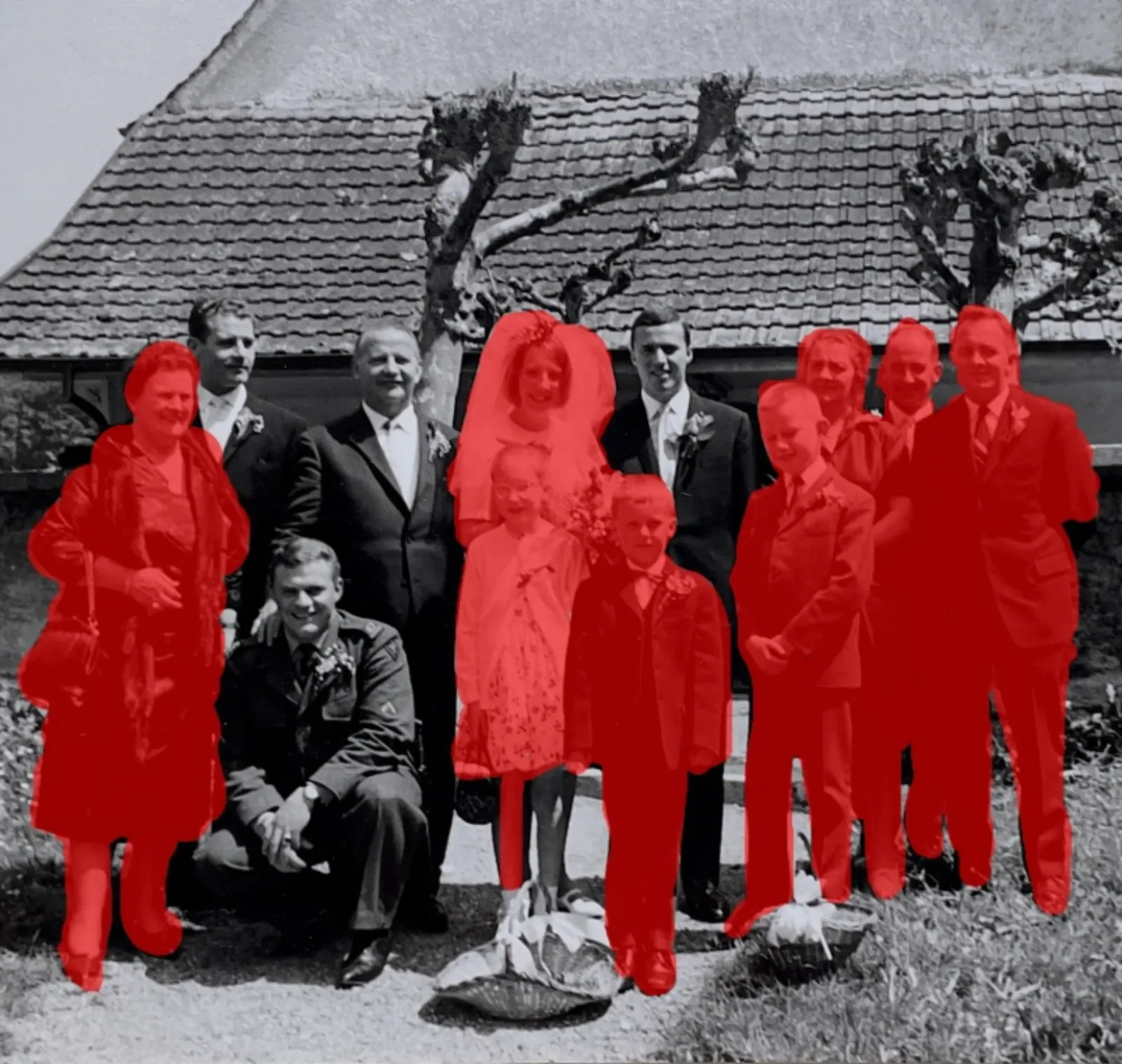
Family albums preserve what is worth remembering: weddings, celebrations, new additions to the family, holidays. Anything that doesn’t fit into the picture of the good life is, at best, hinted at: in my own family history, the abuse my Swiss grandfather suffered, the double life he led as a gay family man, the taboo that drives a wedge between the generations and leaves scars. The work follows the tear by pairing pages from the family album with another and searching for words to describe the other side.
Luan Afra Evans | Sunny/Sonny
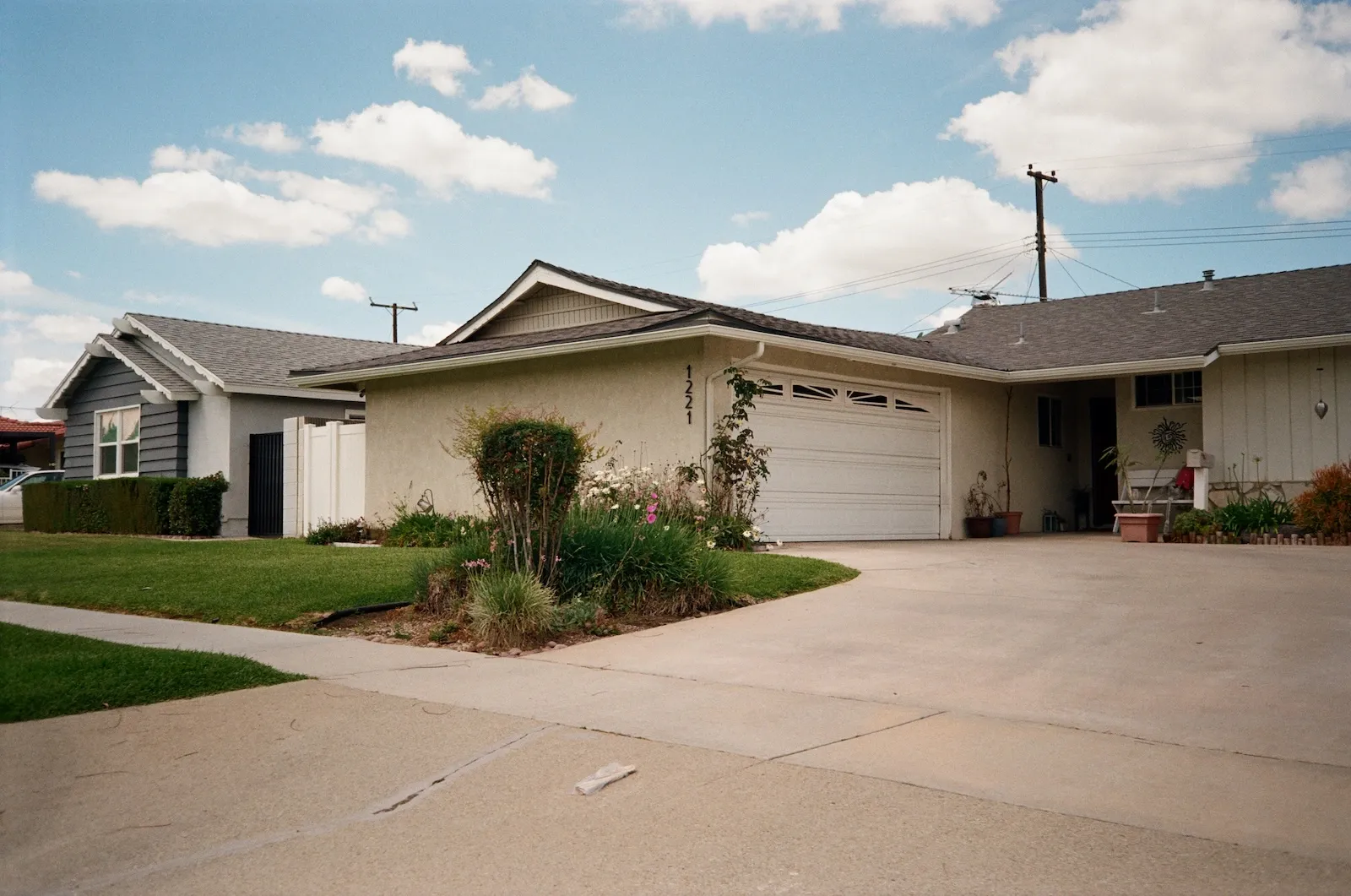
How do you capture a person you’ve never met? A person who has had a profound impact on your life? Someone who was known and loved by someone close to you, yet remains a stranger to you? Sunny/Sonny is an attempt to get to know my grandfather Harvey; a Black American who was stationed in Germany when he met my white grandmother, Eveline. The two fell in love, moved to Los Angeles, and had children. It was an American Dream – until my grandfather died suddenly. My grandmother returned to Germany with the children. This work is a what-if, atribute and a search for memory, identity, and the present.
Instagram: @evans_la_
Florian Günzel | ach, diese Lücke, diese entsetzliche Lücke … aber Lebbe geht weider!
inspired by the film Smoke: an analog photograph of myself every day, since 27 June 1999
at first, before social media and smartphones, it was an attempt to let my then girlfriend share in my stay in New York, and to maintain a connection despite the distance
perhaps unconsciously triggered by my mother’s suicide on 4 July 1995, and by the desire to set something against the possibility of further loss
to preserve moments and encounters that, in all likelihood, I would never have
experienced without that rupture, so that they, too, would not simply vanish
alongside collaged photographs of my mother, a selection from what has now grown to around 10,000 daily analog photographs is shown here: those taken on the anniversary of her death
because life goes on … and, fortunately, it hasn’t turned out badly at all
Instagram: @florianguenzel
Jens Gyarmaty | Alles in Ordnung
The past lies safely tucked away in the closets.
The objects in the estate serve both as repositories of individual experiences and as vessels of collective memory. Amid the tension between preservation and repression, this work explores how the unspoken has left its mark on the present.
Instagram: @jensgyarmaty
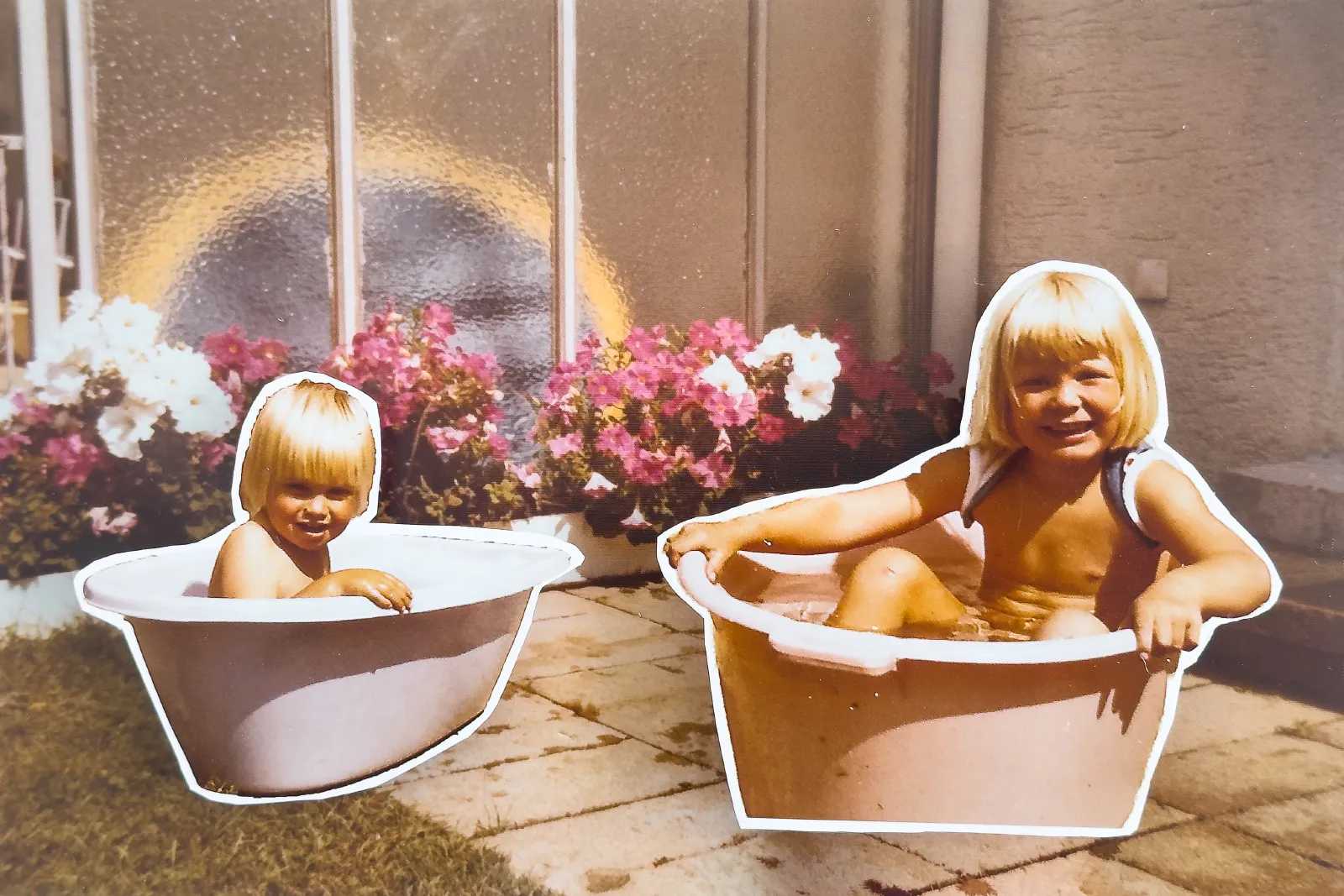
Matthias Hamm | Days like Pril Flowers
The work is based on photographs of my family in a suburb of Munich in the 1970s. Through the three-dimensional montage, the apparent individuality of the photographs recedes into the background in favour of an aesthetic reminiscent of magazines from that era. The images are playful, cheerful and carefree, as if they were the family from the advert for the Pril flowers that were ubiquitous back then. The Pril flowers eventually disappeared again, just like the light-heartedness of those days in the newly moved-into townhouse.
Instagram: @menzing_photography
Celestine Hassenfratz | Mondviolen – “I’ve Wanted to Leave This Place for a Long Time.”
A woman from my family disappeared.
Left behind are her things: tablecloths, spoons, a veil, and the initials L.K.
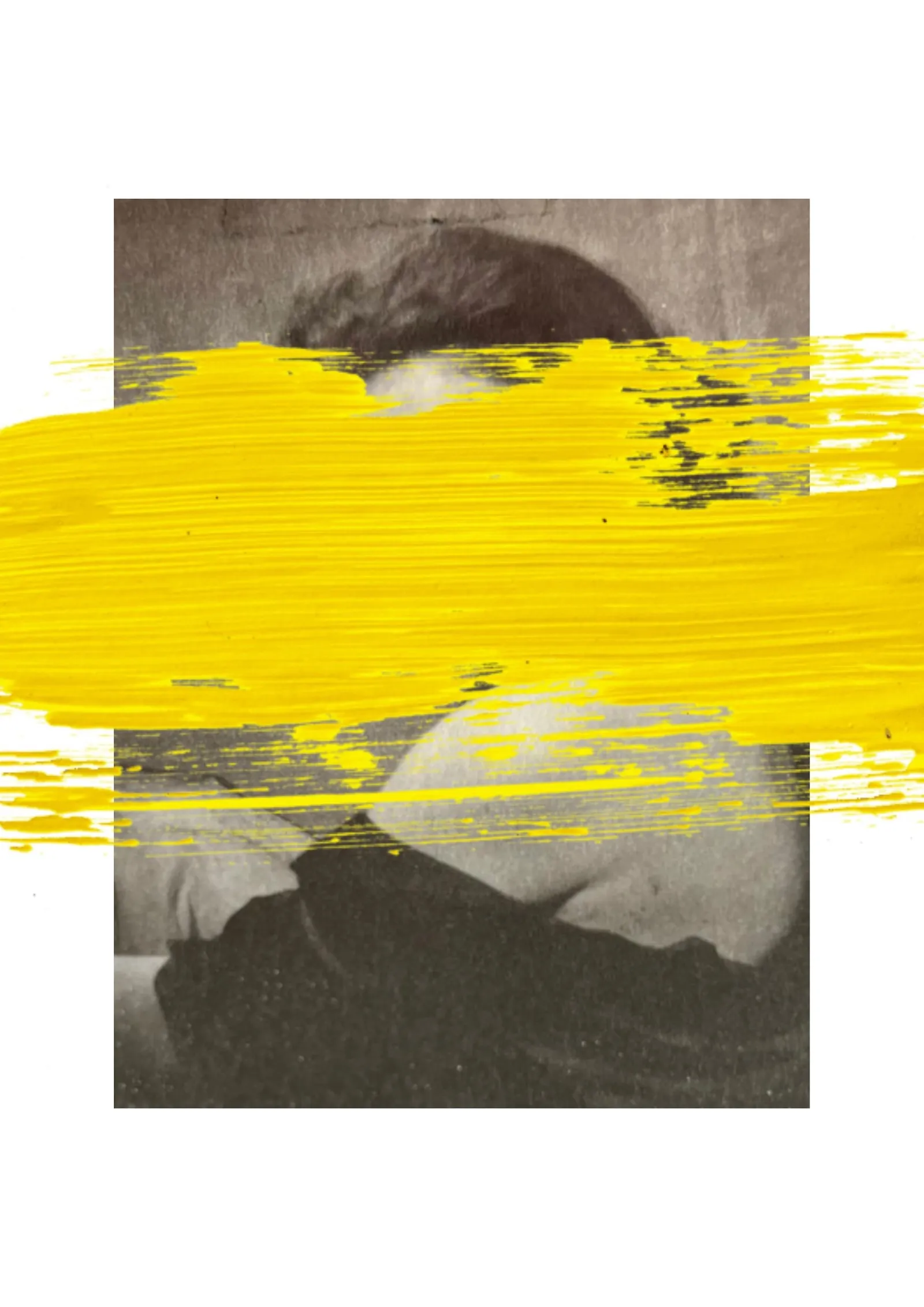
I begin to follow her trace and ask: What remains of a life that lay so long in the dark?
Scraps, fragments, that can hardly be pieced together anymore.
I am still here.
Can therefore tell,
remember,
not forget.
And if just one person thinks of her again,
then she may be.
Instagram: @celestineluz_
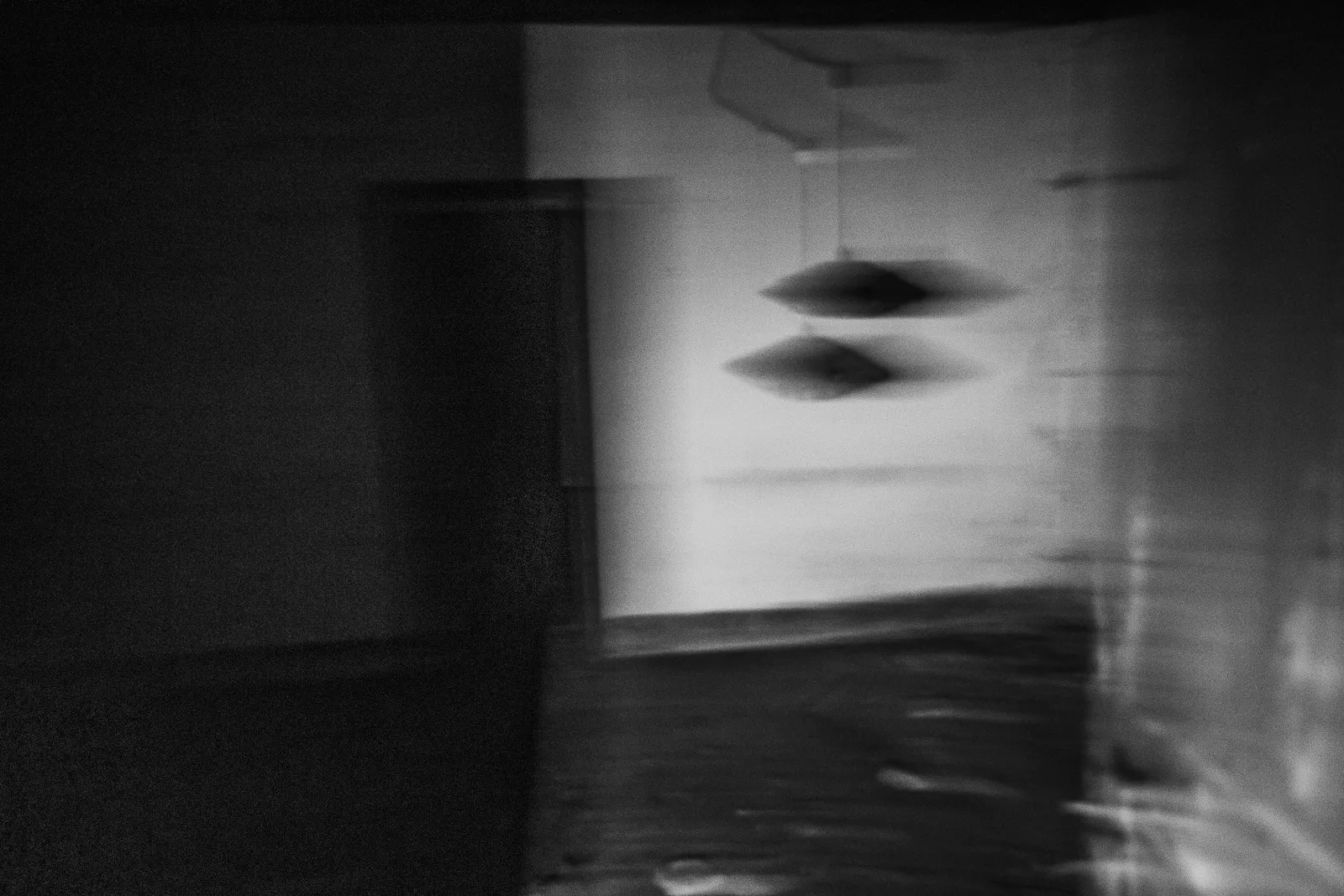
Emma Liebs | Phantom
Unspoken memories pass from generation to generation, seeping away until they settle into other sediments and, sooner or later, resurface. They poison the soil in which new political systems are meant to grow. Incomprehensible phantom images, never complete.
An East German family history and a photo archive that stretches back to Czechoslovakia after World War II, depicting the intangible and unreal conditions of intergenerational memory.
The series ‘Phantom’ contrasts the archival material with new photo-documentary works and extracts it from its respective context in an attempt to gain access to an East German site of collective and familial memory and to link it to diffuse contemporary echoes.
Phantom is an expression of a temporal and spatial exploration of a supposedly exclusive family history, one that is interwoven with major political upheavals and social change.
Instagram: @emmaliebs
Christiane Linsel | NACHFAHREN
Every family carries its own images. Some fit into an album; others exist only in memory. Historical photographs and newly made images meet along a journey through the places that shaped one family’s life, weaving the past together with a present that contributes its own images.
Ralf Micus | ANNAVARIATIONEN I
I own a portrait photograph on a glass negative of my grandmother, Anna Rothbauer (née Babion; 1915–2007). The photo was taken at the Graphische Lehr- und Versuchsanstalt in Vienna, where Anna trained as a photographer from 1928 to 1932. This image has long fascinated me. Now, the negative serves as the basis for a variety of interpretations: contact prints and enlargements on baryta paper, hand-colored versions, collages, cyanotypes, and a limited-edition T-shirt.
Suzanne Reichenbach | Role Model
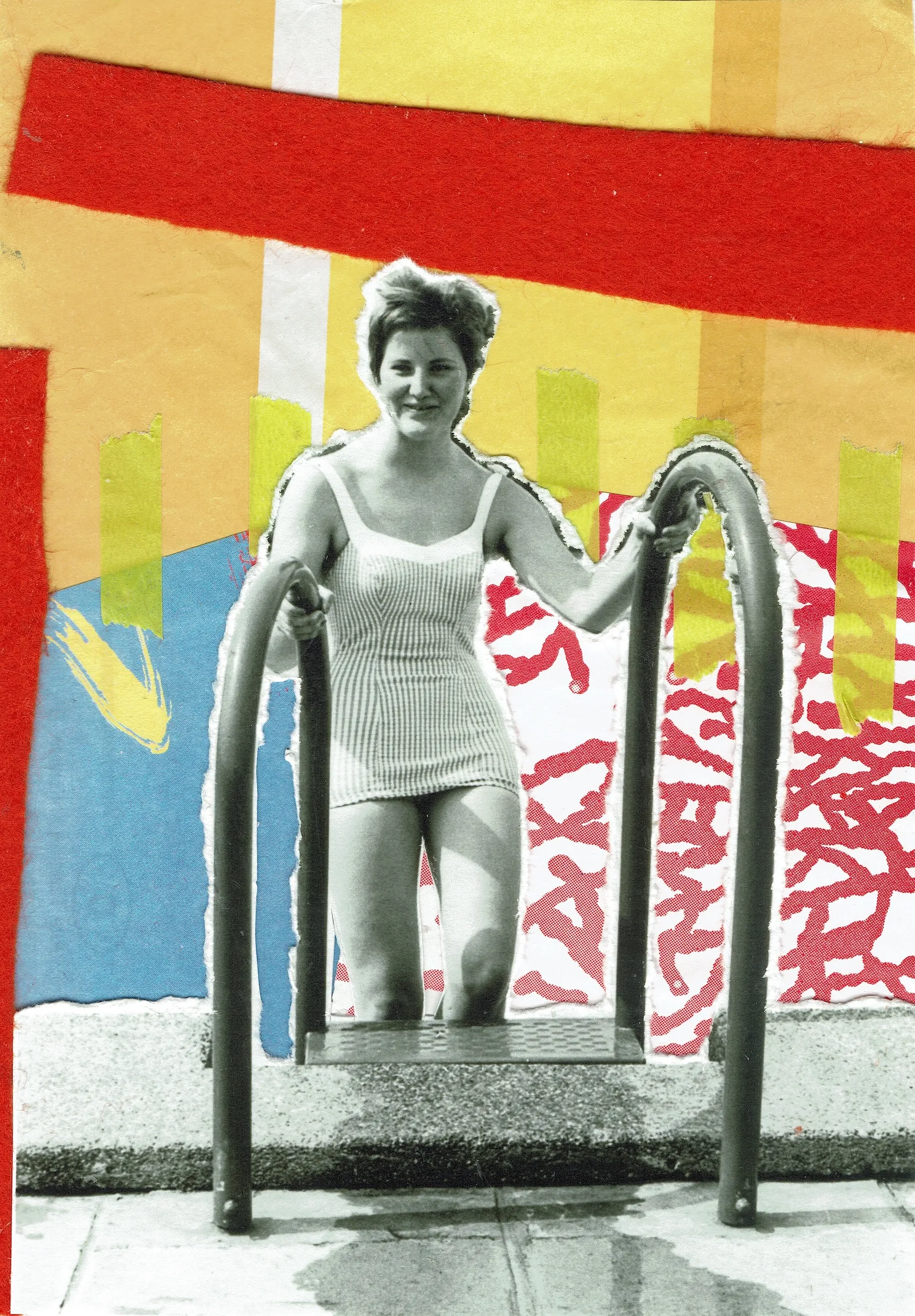
Fragments from my grandmother’s life in the 1950s are placed alongside my own present in Berlin, creating a dialogue between two times. I look at her experiences through today’s logics: social media, dating apps, self-presentation, and visibility. Beauty, love, work, and motherhood appear as roles that change, but also repeat. The project asks how female life models are passed on, re-evaluated, and shown anew across generations.
Instagram: @_suz_anne
Framework program
☞ Sign-up for PiE’s free, weekly Newsletter and stay up to date!
Thursday, Oct 1, 2026, 7 – 10 pm
Opening Reception

Exhibition Venue
Fotogalerie Friedrichshain
Helsingforser Platz 1, 10243 Berlin, Germany
Opening hours for this exhibition: Tue – Sat 2 – 6 pm, Thu 10 am – 8 pm
Admission: free