



35 years after the end of the division of Germany, the Stadtmuseum Berlin has dedicated a large scale film exhibition in the Museum Nikolaikirche to the upheavals in Berlin around 1990.
Short documentary films, as well as excerpts from film and television span a period of four decades, affording rare insight into the far-reaching changes of this era. Above all in East Berlin, people experienced a storm of seemingly contradictory events. On the one hand, self-empowerment and new freedoms arose, not to mention the promise represented by the market economy. On the other hand, uncertainty prevailed, as did the threat of unemployment, and of violence directed against those who were perceived not to belong. At the same time, the exhibition includes artists who investigate those years from today’s perspective. They look at the spatial and societal ruptures and continuities between then and now in a city that, perhaps more than any other, represents the political history of Europe in the 20th century.
Hopes and Dissapointments
On January 11, 1991, at the Museum Nikolaikirche, the constitution for unified Berlin was determined. However, shared life is structured not only by the democratic principles of this document, but above all by everyday life, the economy, and architecture, as well as by cultural modes of belonging and structural inequalities. The exhibition offers a space for examining a period replete with hope and disappointment, pointing towards personal histories, experiences, and perspectives that are often not heard or have been repressed.
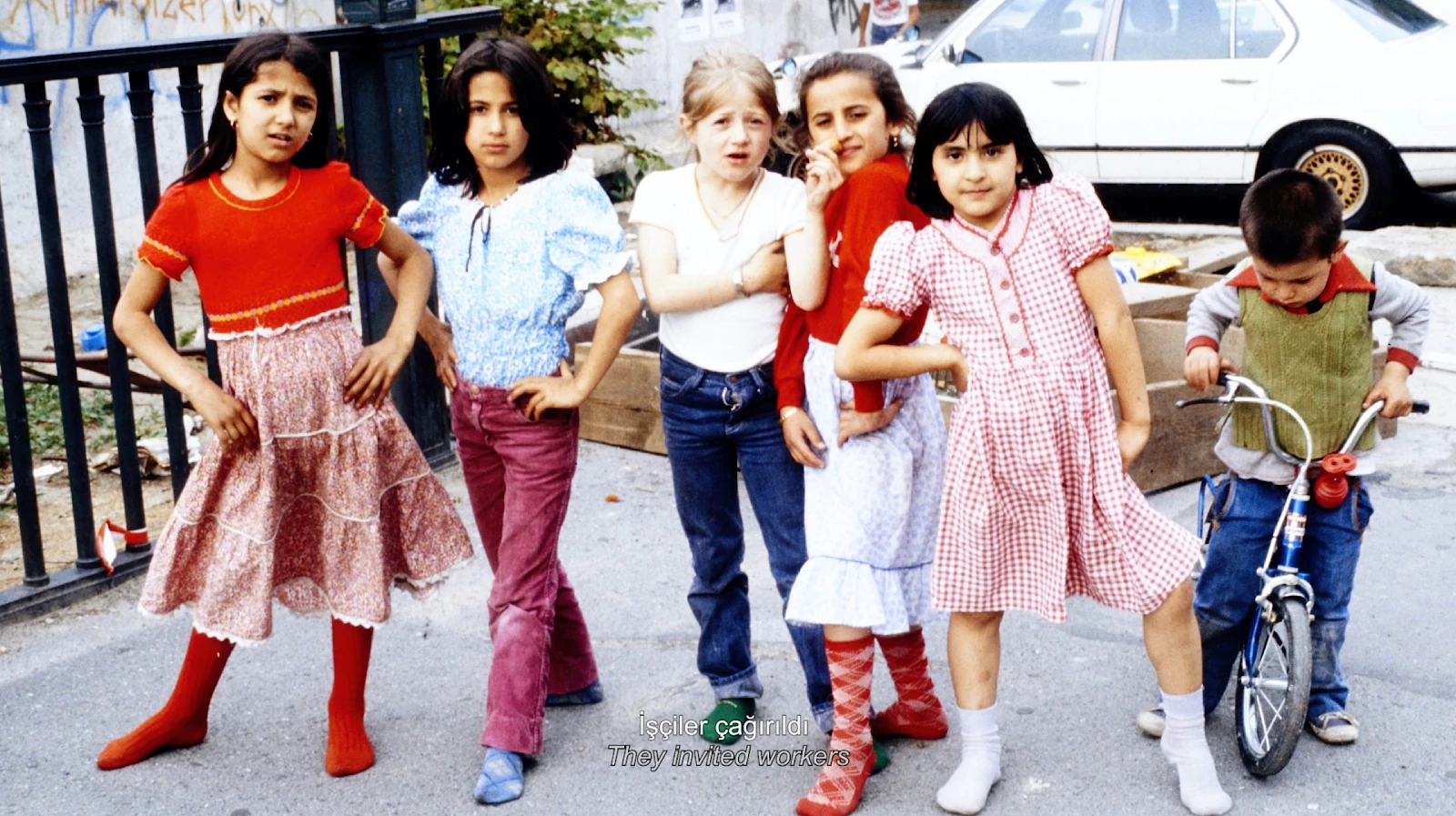
What, for example, did the outbreak of nationalism and racism after the fall of the Wall mean for people with migrant backgrounds in West and East Berlin? “Today yet, tomorrow surely” consciously casts light on events that are no longer remembered, or remembered differently. This includes the Monetary, Economic and Social Union on July 1, 1990, which went hand-in-hand with the end of internal border controls in Germany.
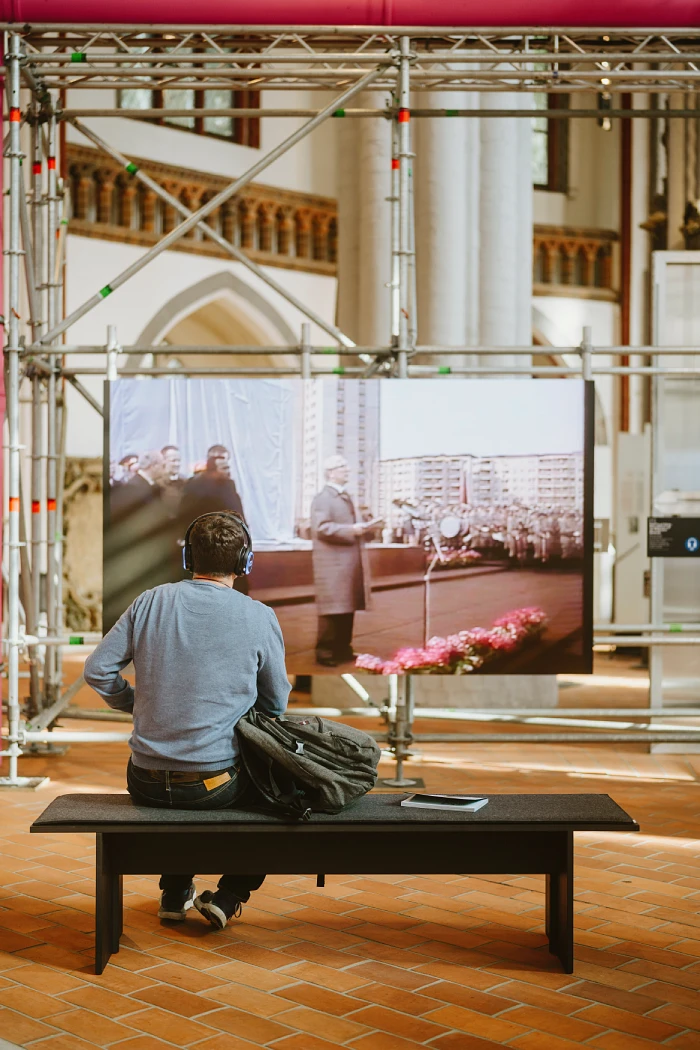
Many hours of film material are embedded within a scaffolding structure that fills the museum, containing nine large-format screens. Visitors are invited to dive into filmic representations of lived experiences, from film-makers whose practices range from participant observation, to open conversations, to artistic appropriation of history and the present. A journey of discovery through the shifting landscapes of past and present Berlin.
The Museum and the Process of Unification
Berlin’s Nikolaikirche has co-authored the history of German unification. Here, on January 11, 1991, the inaugural session of the first Berlin House of Representatives to include East and West since 1948 was inaugurated: a symbolic act in a symbolic place. As the oldest still-existing church building in the city, the Nikolaikirche was already the site of Berlin’s very first assembly of political representatives in 1809. But even this symbolic stage could not withstand the cold facts of political power relations.
Once more, the Nikolaikirche session demonstrated that German unification was about unity between two unequal partners. The most important point on the agenda was the debate around the future Berlin constitution. Unsurprisingly, the majority of parliamentarians decided to expand the reach of West Berlin’s constitution of 1950 to the city’s East. Shortly beforehand, the old constitution had been expanded with an additional paragraph stipulating that the parliamentarians, rather than civil society, should be the ones to develop a new constitution, which should then be ratified through popular vote. The constitutional draft of the GDR Round Table meetings and the provisional East Berlin constitution of 1990 – which both allowed for citizens to have more of a voice – were broadly disregarded in the following years. Nonetheless, the Berlin Constitution of 1995 represented an important step in allowing for further participation, and therefore a greater degree of direct democracy.
Curated by Florian Wüst in collaboration with Suy Lan Hopmann.
Scenography: HMDMR [hamdemir], Bahadir Hamdemir.
Media production: PxB Studios, Jana Pausinger, Alexander Bartneck.
The exhibition is accompanied by a publication, edited by Elke Neumann.
In cooperation with Deutsche Kinemathek – Museum für Film und Fernsehen.
With the friendly support of Arsenal – Institut für Film und Videokunst, Filmuniversität Babelsberg KONRAD WOLF and PROGRESS Film.
In addition to the programme of events at the Museum Nikolaikirche, an accompanying film series will take place in cooperation with Arsenal – Institute for Film and Video Art, Büro für Dramaturgie, Gropius Bau, neue Gesellschaft für bildende Kunst (nGbK) and Stadtteilzentrum KREATIVHAUS on the Fischerinsel.
A publication accompanies the special exhibition. It offers in-depth insights into the cinematic exploration of Berlin’s period of transformation surrounding the fall of the Berlin Wall. With texts by curator Florian Wüst, editor Elke Neumann and journalist Ania Faas.
Framework program
☞ Sign-up for PiE’s free, weekly Newsletter and stay up to date!
The framework program for this exhibition will take place primarily in German. Please visit the website of Museum Nikolaikirche for further infos.
In addition to the programme of events at the Museum Nikolaikirche, an accompanying film series will take place in cooperation with Arsenal – Institute for Film and Video Art, Büro für Dramaturgie, Gropius Bau, neue Gesellschaft für bildende Kunst (nGbK) and Stadtteilzentrum KREATIVHAUS on the Fischerinsel.
Easter Opening Hours
Regular times, see below.