

The master class at the Ostkreuz School of Photography presents its latest work from the past two years. Under the direction of Linn Schröder and Ingo Taubhorn, the exhibition focuses on cracks in systems, on the no longer and the not yet, and on the in-between. The series tell stories of ruptures, tensions and transitions, as well as violence, flight and borderline experiences. Family biographies are reflected upon in terms of their contemporary and individual context, the relationship between humans and nature is questioned, and gender assignment and role models are examined.
With works by Verdiana Albano, Sandra Buschow, Eva Grillhösl, Paulina Hildesheim, Jana Islinger, Telke Jungjohann, Rainer Christian Kurzeder, Ramon Lehmann, Michelle Maicher, Claudia Neuhaus, Lukas Ratius, Eva von Schirach, Helen Stevens, Tara Wolff, and Antine Karla Yzer.
The exhibition catalogue is available during the exhibition at the Haus am Kleistpark for €15 (cash or card payment accepted), and via DM to @ostkreuzschule_meisterklasse.
Discover more about the artists, their series and the accompanying program on their Instagram account, @ostkreuzschule_meisterklasse!
Brief introductions to the individual works in the exhibition
Verdiana Albano (1993), i ain’t from no east coast
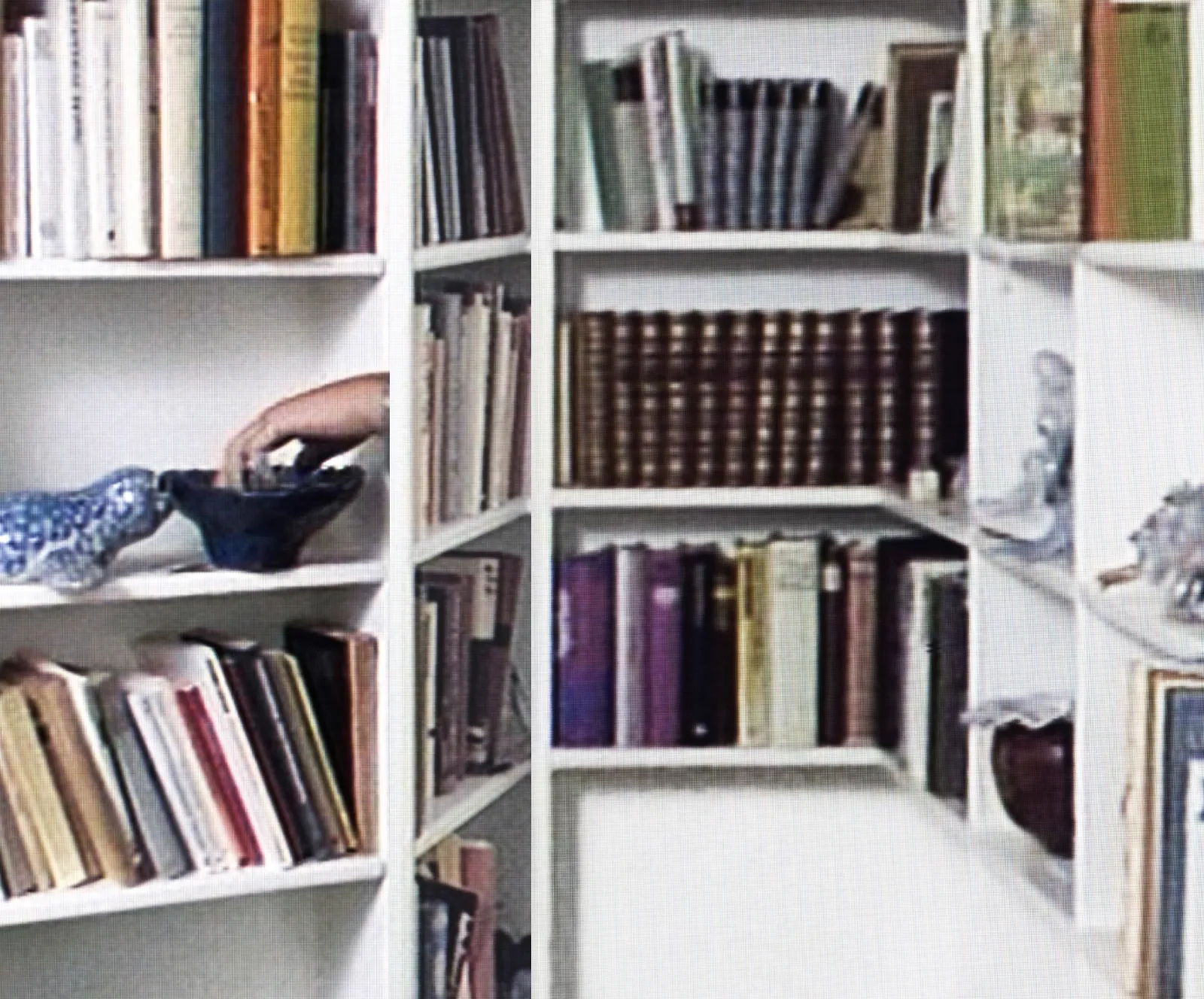
Archival material, her own photographs, and objects are combined in an installation. The work unfolds as a fragmentary exploration of Afro-European biography and post-socialist realities.
Sandra Buschow (1976), Shedding
Self-portraits and abstract color compositions in an intimate sequence of images. The body as a site of boundary experiences, vulnerability, and self-empowerment.
Eva Grillhösl (1974), Black Box
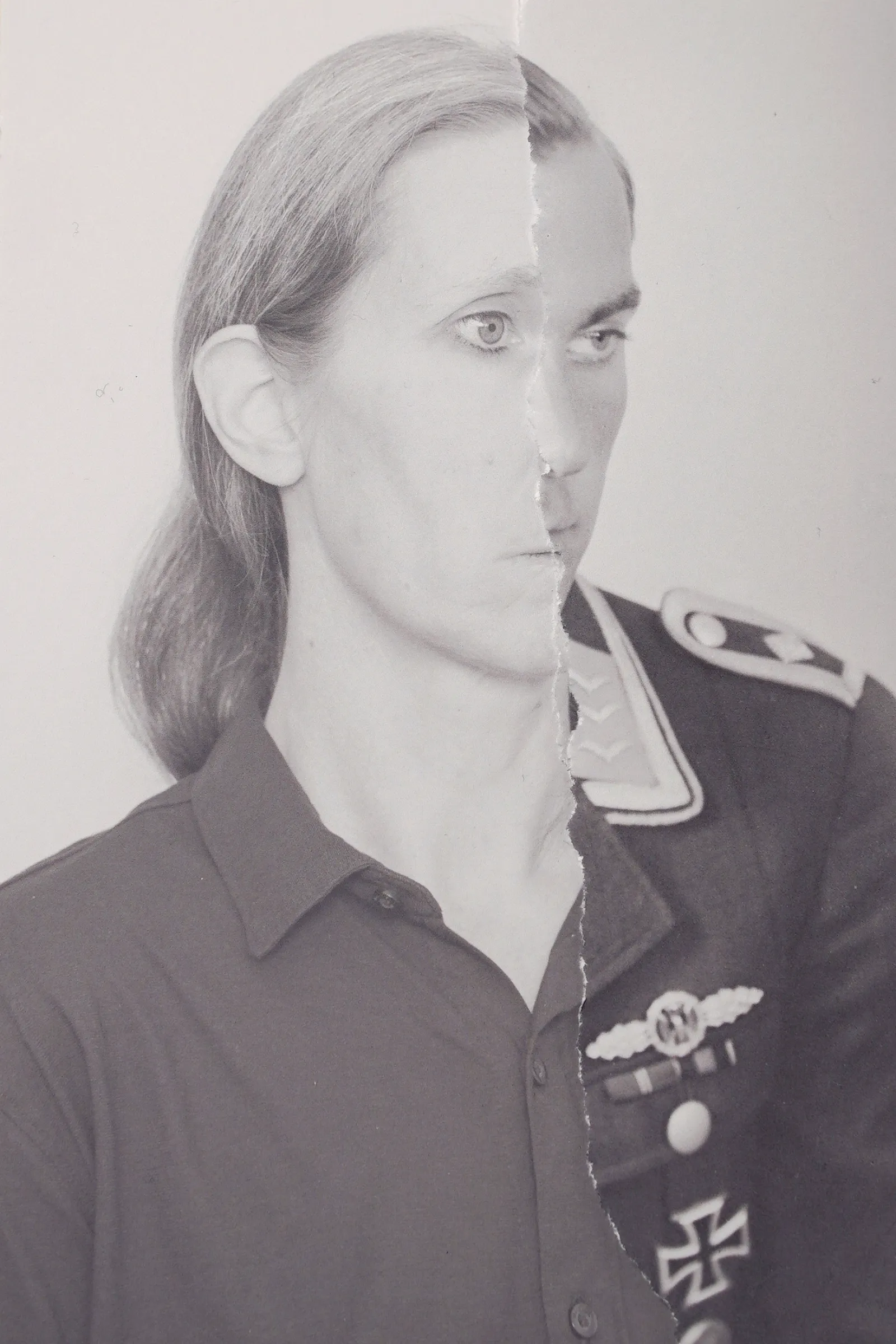
Historical photographs taken by her grandfather meet her own images in a dialogical arrangement. Archive and present enter into a dynamic dialogue, questioning experiences of war and familial repression.
Paulina Hildesheim (1995), Monuments
This installation focuses on fog collectors in southwestern Morocco. Functional technology emerges as a response to the crises of climate change and water scarcity.
Jana Islinger (1999), It’s my wound because it’s pain for me
This short documentary film (13′) and photographs depict everyday Armenian life during military conflicts. Loss, resilience, and female perspectives become visible within the context of geopolitical power.
Telke Jungjohann (1994), I give them titty, try to keep them calm
The focus of this serial work is the relationship between humans and farm animals. Using the dairy cow as an example, concepts such as care, control, and economic exploitation are explored.
Rainer Kurzeder (1971), Beyond the Silence
A long-term photographic project about fathers and their queer sons. Moments of intimacy emerge within the tension between silence, expectations, and traditional images of masculinity.
Ramon Lehmann (1986), Between Heaven and Earth
A photographic exploration of UFO sightings and the people behind them. Documentary portraits and staged images open up a space between faith, science, and speculation.
Michelle Maicher (1997), Achilles Heel: In Achilles Heel, Michelle Maicher examines the so-called Suwałki Gap as a politically sensitive border region of Poland. Landscape and portrait photographs encapsulate isolation, anxieties, and the search for the future.
Claudia Neuhaus (1980), Are We Nothing?
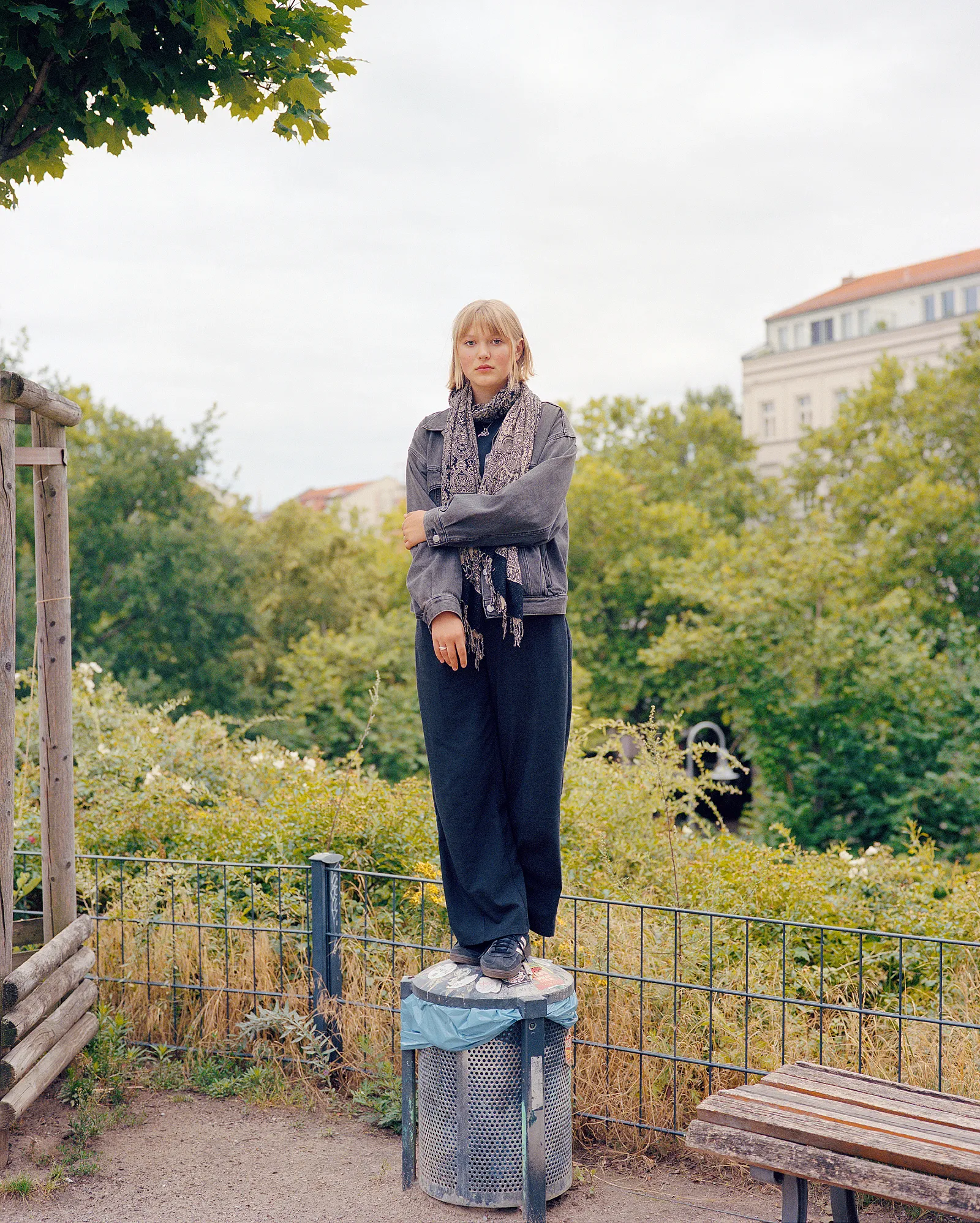
Typological portraits of young people in urban spaces. Between green spaces and the urban environment, inventory and staging converge on the question of the uncertainty of the future.
Lukas Ratius (1989), waltan
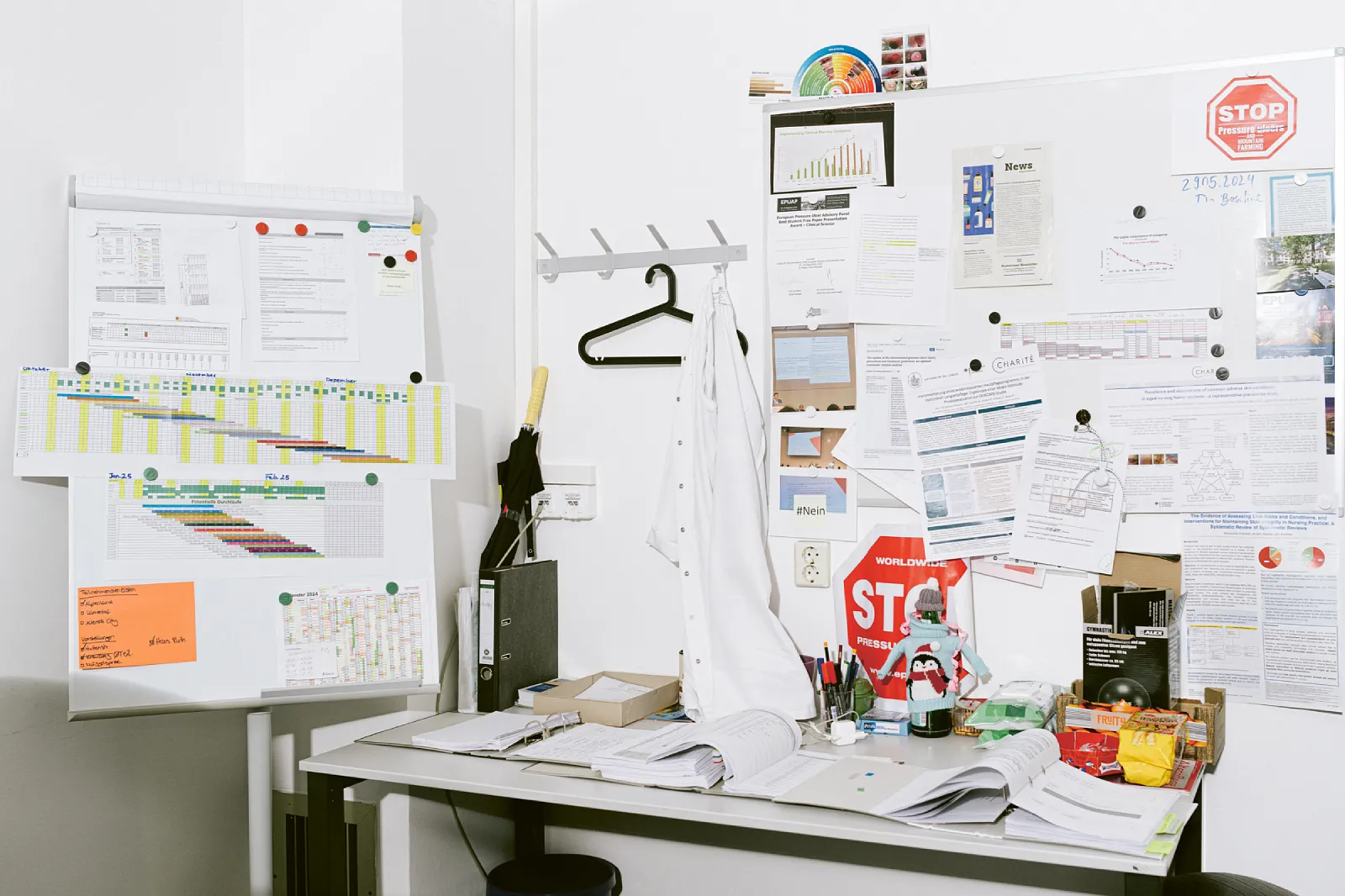
The work examines the topic of police violence through photographs and research material. The artistic exploration focuses on documenting individual perspectives of those affected, in tension with normative state structures.
Helen Stevens (1976), No Child’s Play
An exploration of her own involuntary childlessness. The resulting series of images gently reveals farewell, grief, pain, and the process of reorienting oneself.
Eva von Schirach (1968), zeitmagazin: refurnish
Collages of family photographs of her own fighting sons and luxury furniture advertisements follow a chronological montage. Timeless design contrasts with the chaotic realities of growing up.
Tara Wolff (1971), I Am Wolf
Woman and wolf meet as allies on the margins of social control. In confronting dominant narratives, wildness and freedom beyond established attributions become tangible.
Antine Karla Yzer (1993), It’s not violence, if it’s normal
Photographic diptychs created in collaboration with delinquent youths. In a place where discipline shapes everyday life, the work explores notions of adolescent masculinity and the search for stability.
Framework program
☞ Sign-up for PiE’s free, weekly Newsletter and stay up to date!
Saturday, Apr 18, 2026, 11 am – 6 pm
Opening day
The artists and the curatorial team are present and will guide visitors through the exhibition.
Sundays, 3 pm
Guided Tours (de)
With varying artists, details see below.
Sunday, May 3, 2026, 3 pm
Gallery Weekend Berlin Special
Guided Tour (de) with Linn Schröder, Ingo Taubhorn, and the artists.
Thursday, May 21, 2026, 7 pm
Artist Talks (de)
Participation is limited to the available seats.
The curatorial team in conversation with the artists:
7 – 7:45 pm: Ingo Taubhorn and Linn Schröder in conversation with Sandra Buschow, Rainer Christian Kurzeder, Claudia Neuhaus und Tara Wolff.
7:55 – 8:40 pm: Ingo Taubhorn and Linn Schröder in conversation with Eva Grillhösl, Paulina Hildesheim und Eva von Schirach.
Sunday, May 24, 2026, 3 pm
Guided Tour (de)
With the artists Claudia Neuhaus, Rainer Christian Kurzeder, Sandra Buschow, Tara Wolff.
Sunday, May 31, 2026, 3 pm
Guided Tour (de)
With Ingo Taubhorn, Linn Schröder and the artists Claudia Neuhaus, Eva Grillhösl, Rainer Christian Kurzeder, Sandra Buschow.
Sunday, June 7, 2026, 3 pm
Guided Tour (de)
With Claudia Neuhaus, Eva Grillhösl, Helen Stevens, Rainer Christian Kurzeder, Sandra Buschow.
Sunday, June 14, 2026, 3 pm
Guided Tour (de)
With: tba.
Sunday, June 21, 2026, 2 – 6 pm
Finissage & Pop-up Guided Tours
Closing event with the curatorial team, artists and guests.